One-Step ISBM vs Two-Step ISBM: Pros, Cons and Cost Comparison
The decision between one-step and two-step ISBM is far more nuanced than a simple throughput comparison. Both processes produce biaxially oriented, high-performance plastic containers from the same range of materials — PET, PP, PETG — and the finished bottle from each process can be optically indistinguishable to the consumer. The differences are in how they get there: the economics, the process architecture, the flexibility, and the specific applications where each approach delivers a genuinely superior total cost of ownership.
While Article 2 in this series introduced the fundamental process differences between one-step and two-step systems, this article digs deeper into the commercial dimension: the detailed cost structures, the pros and cons of each configuration for specific business models, and a framework for calculating which makes economic sense for a specific project.
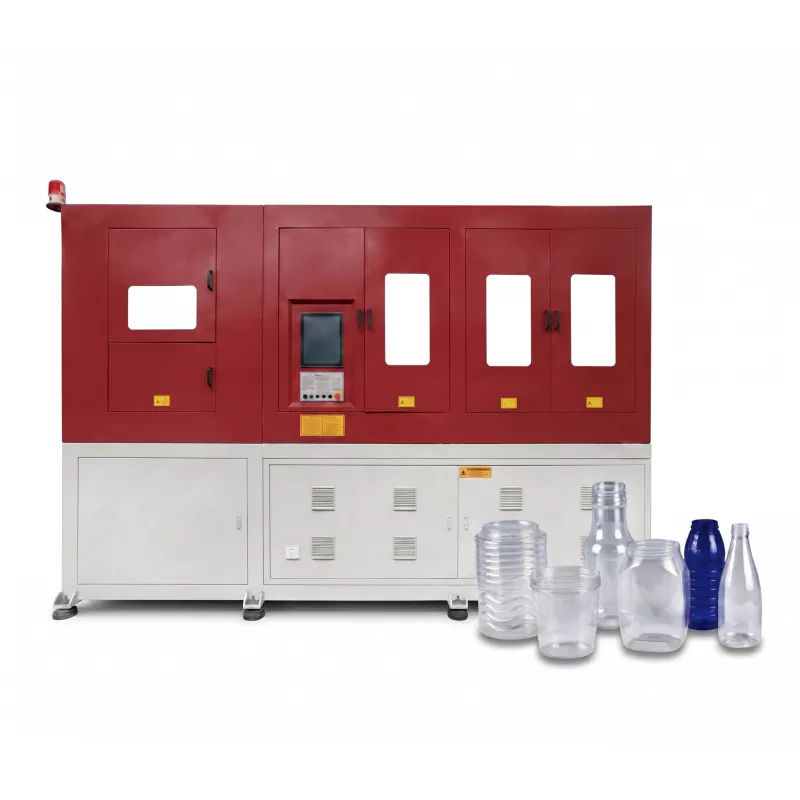
Quick Reference — One-Step vs Two-Step at a Glance
| Factor | ISBM in un solo passaggio | Two-Step RSBM | Winner at This Factor |
|---|---|---|---|
| Peak output (BPH) | 500–6,000 | 6,000–80,000+ | Two-step (high volume) |
| Machine CAPEX (entry level) | $40,000–$120,000 | $300,000–$2,000,000+ | One-step (lower entry) |
| Mold changeover flexibility | 2–4 hours; low disruption | 4–8 hours each machine; high disruption | One-step (multi-SKU ops) |
| Energy per 1,000 bottles | Lower (retained injection heat) | Higher (full reheat; two machines) | One-step (energy efficiency) |
| Preform sourcing flexibility | Own preforms only (machine-specific design) | Any compatible preform supplier | Two-step (supply chain flexibility) |
| Preform inventory / storage | Zero — made and blown inline | Substantial warehouse / silo required | One-step (no inventory cost) |
| Wide-mouth / complex geometry | Excellent (conditioning station advantage) | Limited (IR oven uniform heating constraint) | One-step (complex shapes) |
| Cost per bottle at 10M/year (single SKU) | Higher (limited cavitation ceiling) | Lower (high-cavitation; volume amortisation) | Two-step (high single-SKU volume) |
| Pharma GMP validation complexity | Lower (one machine; no preform handling) | Higher (two machines + preform system) | One-step (regulated industries) |
| Floor space requirement | Compact | Large (two machines + preform handling) | One-step (space efficiency) |
Full Breakdown — One-Step ISBM Pros and Cons
- No preform inventory or preform supplier dependency
- Lower energy per bottle (residual injection heat reduces conditioning energy by 30–50%)
- Lower machine CAPEX entry point — suitable for new businesses and SME manufacturers
- Compact machine footprint — a complete production system in one unit
- Superior neck precision — preform never mechanically handled before blowing
- Handles complex bottle geometries: wide-mouth jars, asymmetric bodies, short-body bottles
- Fast mold changeover (2–4 hours) — suits multi-SKU, multi-product operations
- Simpler GMP qualification in pharmaceutical and medical applications
- Can produce small to medium runs economically without high tooling amortisation pressure
- Material flexibility: switch PET / PP / PETG with process parameter adjustment
- Lower maximum output — ceiling typically 4,000–6,000 BPH per machine
- Preform design is proprietary to each machine — cannot buy external preforms
- Higher cost per bottle than two-step at very high single-SKU volumes (>8M/year)
- Injection and blowing must be synchronised — fault in one station stops entire machine
- More complex maintenance — injection unit and blow station in one system
- Cycle time constrained by injection cooling — longer than two-step blow-only cycle
Full Breakdown — Two-Step ISBM (RSBM) Pros and Cons
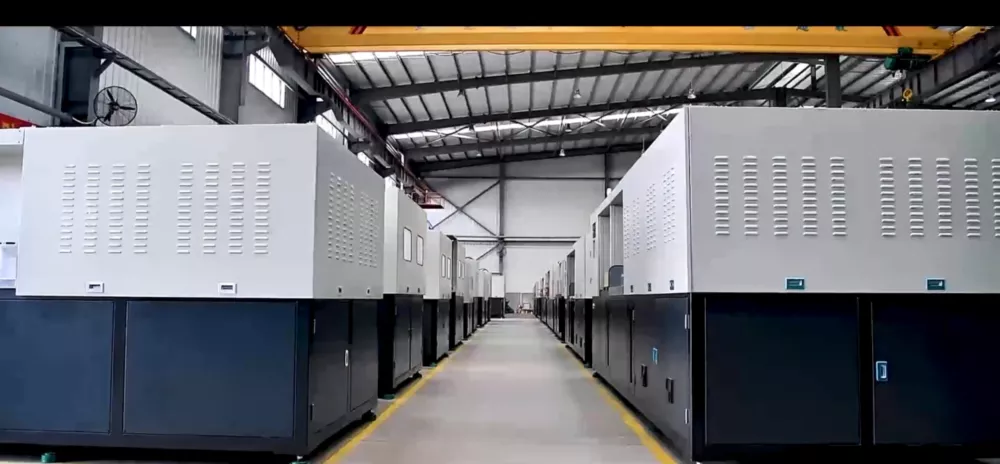
- Massively higher output — up to 80,000+ BPH on multi-cavity linear systems
- Can purchase preforms from external suppliers — supply chain flexibility, competitive pricing
- Blow machine can run independently of injection system — decoupled production scheduling
- Preform inventory provides production buffer — blow machine can continue if injection system needs maintenance
- Lowest cost per bottle at very high single-SKU volumes due to extreme cavitation
- Widely adopted by beverage industry with established service and support ecosystem
- High CAPEX — two machines plus preform handling, conveying, and storage
- Large footprint — injection machine, blow machine, transfer system, preform silos
- Higher energy consumption — full IR reheat cycle adds significant kWh per 1,000 bottles
- Preform storage introduces contamination, moisture, and quality risk
- Wide-mouth and complex geometries difficult — linear IR ovens not suited to unusual preform proportions
- Higher GMP validation burden in regulated industries
- Committed to one preform design per tooling investment — less design flexibility
- Longer changeover time — two machines must each be changed and revalidated
Total Cost of Ownership — A Worked Comparison
The following is an illustrative cost comparison for producing 2 million 500ml PET bottles per year. All figures are indicative — actual costs depend heavily on location, energy rates, labor costs, and specific machine models.
| Cost Element | One-Step ISBM (per year) | Two-Step RSBM (per year) |
|---|---|---|
| Machine depreciation (10yr) | Low (single machine) | High (two machines) |
| Energy cost per 1,000 bottles | Lower by ~25–40% | Baseline |
| Preform handling and storage cost | Zero | Significant (floor space, handling equipment) |
| Tooling cost per set | $15,000–$40,000 (preform + blow) | $50,000–$140,000 (IM mold + blow mold) |
| Labor (operators per shift) | 1 | 1–2 |
| Reject/scrap rate contribution | Moderate (integrated faults affect whole cycle) | Slightly higher (preform handling/quality adds variable) |
| Typical break-even crossover | Favoured below ~5M bottles/yr (single SKU) | Favoured above ~8M bottles/yr (single SKU) |
Which Business Models Suit Each Process
One-Step ISBM is ideal for:
- Contract packaging organisations (CPOs) serving multiple industries with diverse bottle designs
- Pharmaceutical manufacturers producing multiple drug products in one facility
- Cosmetic brands with large SKU portfolios and frequent seasonal launches
- New market entrants needing low CAPEX to start up
- Specialty food and agricultural chemical producers at low-to-mid volume
- Any operation where design flexibility and fast changeover are more valuable than maximum output rate
Two-Step RSBM is ideal for:
- Beverage bottlers producing a single or few bottle formats at very high volume
- Operations with existing established preform supplier relationships and infrastructure
- Lines where maximum output per square metre is the primary constraint
- Groups who want to decouple preform production from blowing for scheduling flexibility
- Markets where external preform purchasing from commodity producers is competitively priced
To receive a detailed TCO (Total Cost of Ownership) analysis tailored to your specific production scenario — including your target volume, product mix, available floor space, and energy costs — contact our commercial engineering team. We can model both configurations and present a data-driven comparison.
Frequently Asked Questions
Can I add a second one-step ISBM machine later to increase capacity instead of switching to two-step?
Is the optical quality of bottles from two-step the same as one-step?
What happens if I start with one-step and later want to switch to two-step? Can I reuse the tooling?
One-Step or Two-Step — Get a Data-Driven Decision
Tell us your target bottle, annual volume, number of SKUs, and available floor space — we will model both configurations and show you where the economics cross over for your specific situation.