
ISBM Machine for Cosmetic Bottle Production — Achieving Premium Aesthetics at Scale
Cosmetic packaging occupies a unique space in the world of blow molding: the technical requirements are as demanding as pharmaceutical, but the aesthetic requirements are arguably even more stringent. A cosmetic bottle must not only contain and protect the product but serve as a brand ambassador — its shape, clarity, surface finish, and tactile quality directly influence consumer perception of product value. Injection stretch blow molding is the technology of choice for premium cosmetic packaging precisely because it delivers on all these dimensions simultaneously.
This guide is written for cosmetic packaging development teams, brand managers, and contract packaging manufacturers evaluating ISBM machines for cosmetic container production across categories including skincare, haircare, fragrance, personal care, and colour cosmetics.
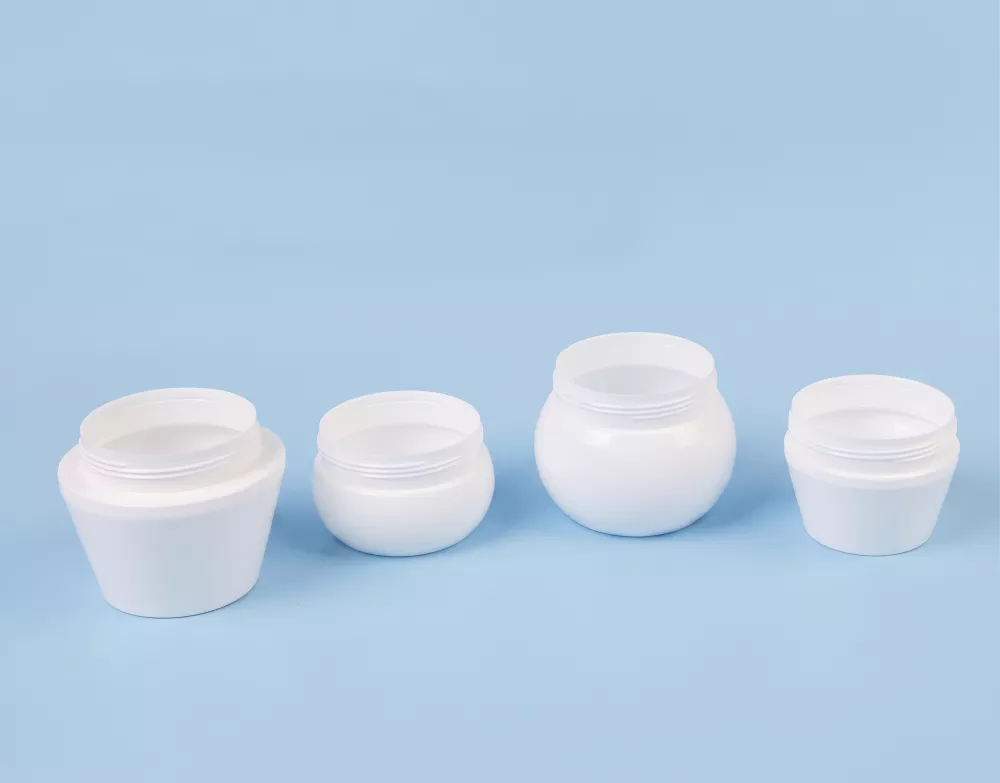
Why Cosmetic Brands Choose ISBM Over Other Blow Molding Technologies
The premium cosmetic packaging market has migrated strongly toward ISBM in recent years, driven by converging trends: the demand for glass-replacing plastic with glass-like aesthetics, growing sustainability pressure to lighten packaging, and the explosion of SKUs that require flexible manufacturing with fast mold changeover. ISBM delivers on all three:
Glass-Like Clarity
PETG and PET ISBM bottles can achieve transmittance above 90% and haze below 1% — matching or exceeding glass in visual transparency. Biaxial orientation thins the wall without sacrificing strength, delivering a lighter, thinner bottle that reads as premium glass to the consumer.
Complex Geometry Freedom
One-step ISBM with its conditioning station enables complex bottle forms — tapered shoulders, asymmetric cross-sections, curved bodies, and narrow waist profiles — that would be impossible or severely compromised in two-step or EBM processes.
Precise Neck Finishes
Fragrance pump necks, lotion dispenser interfaces, and airless bottle necks require tight dimensional control to ensure proper pump engagement, seal, and dispensing behaviour. ISBM injection molding of the neck achieves this without post-processing.
Sustainable Lightweighting
Biaxial orientation allows 30–50% less plastic per bottle vs unoriented alternatives. For brands with sustainability commitments, ISBM delivers lightweighting without sacrificing strength or aesthetics — a critical differentiation versus glass and unoriented plastic.
Material Selection for Cosmetic ISBM Bottles
The three standard ISBM materials — PET, PP, and PETG — each have their own niche in cosmetic packaging:
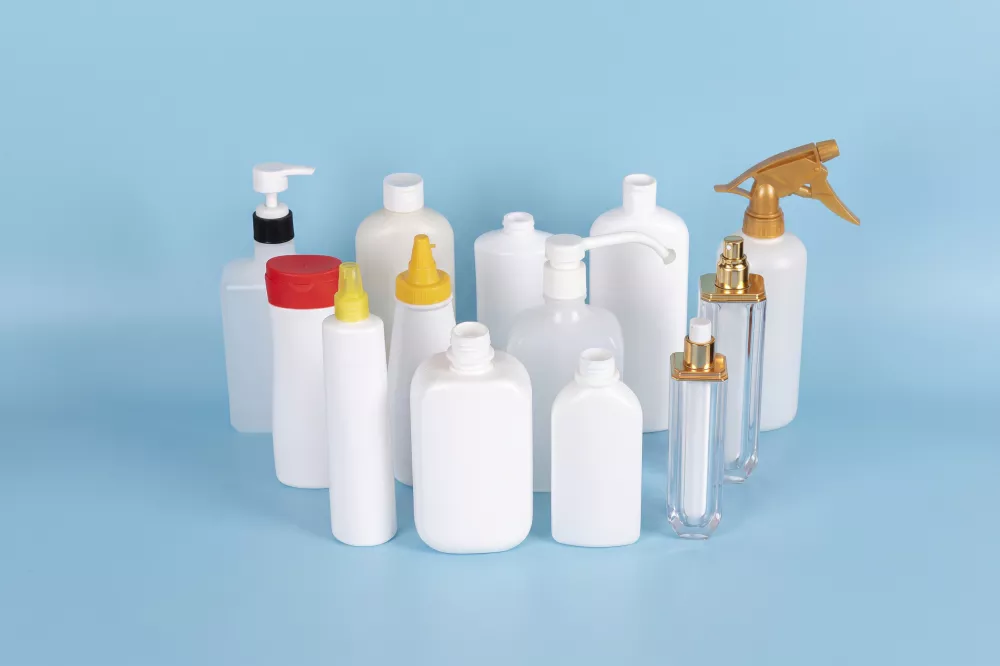
| Material | Cosmetic Aesthetic | Chemical Resistance | Best Cosmetic Applications |
|---|---|---|---|
| 애완 동물 | Crystal clear; high gloss; excellent for light-catching faceted designs | Good for water-based, alcohol-based formulations | Shampoo, conditioner, body wash, toner, lotion |
| PP | Translucent to clear (with high-clarity grades); softer feel; can be pigmented opaque | Excellent for oils, anhydrous, silicone-based products | Facial oils, nail polish removers, anhydrous creams, heavy silicone serums |
| 펫티그 | Exceptional clarity and gloss; glass-like weight and feel; superior surface for printing/metallising | Good for fragrances, alcohols, essential oils, aromatic formulations | Perfume and fragrance, premium serums, luxury skincare, limited edition packaging |
Designing for Cosmetic ISBM — Key Considerations
Creating a successful cosmetic bottle design for ISBM requires close collaboration between the brand design team and the mold engineer from the earliest concept stage. ISBM imposes specific geometric constraints that must be understood before design is finalised:
The bottle body must have an axial height and diameter ratio within the achievable ASR and HSR for the material. Extremely short, fat bottles (low ASR) may under-orient; extremely tall, narrow bottles (very high ASR) risk gate puncture. Work with the mold engineer to verify stretch ratios early in design.
All surfaces parallel to the blow mold parting direction must have draft angles of at least 1°, preferably 2–3° for decorative texture or engraved areas. Under-drafted bottles stick in the blow mold and require significant ejection force that can leave surface marks.
The blow mold parting line on the bottle body will show as a faint mark. For premium cosmetic applications, parting line placement should be specified to fall in a low-visibility location — typically along the narrowest cross-section or a natural geometric edge.
Where possible, use industry-standard neck finishes (GCMI, PCO, etc.) to enable standard pump and closure sourcing. Custom neck designs increase tooling cost and limit supplier options for the closure and dispensing system.
Decoration and Finishing Techniques for ISBM Cosmetic Bottles
ISBM bottles accept all major cosmetic decoration techniques, and the oriented wall surface often provides a better decoration substrate than unoriented alternatives:
| Decoration Method | ISBM Material Suitability | 메모 |
|---|---|---|
| Screen printing (1–6 colour) | PET, PETG, PP | Flame or corona pretreatment required; UV ink preferred for durability |
| Hot stamping | PET, PETG (excellent), PP (good) | Metallic gold/silver; best on smooth high-clarity surfaces |
| Sleeve labelling (shrink sleeve) | All ISBM materials | Full-body coverage; complex shapes suited to sleeve application |
| Frosted / etched finish | PET, PETG | Sand blasting or chemical etching of blow mold cavity surface; premium matte appearance |
| Vacuum metallising | PETG (outstanding), PET (good) | Interior metallising through bottle neck for mirror-like effect; exterior for metallic sheen |
| IML (In-Mold Labelling) | Limited application in ISBM | More common in injection molding; ISBM label integration during blow cycle is technically complex |
Case Study Category: Fragrance Bottle Production with PETG ISBM
Fragrance bottles represent the most demanding aesthetic challenge in cosmetic packaging: they must equal glass in clarity and gloss, withstand the chemical aggressiveness of concentrated aromatic compounds (ethanol, essential oils, synthetic fragrance chemicals), and communicate luxury through their tactile quality. PETG processed on a one-step ISBM machine is uniquely positioned for this application:
- PETG’s amorphous structure eliminates any risk of crystalline haze — the bottle remains permanently water-clear
- Excellent resistance to fragrance chemicals (ethanol, aromatic esters, terpenes) that attack standard PET
- High density (1.27 g/cm³) gives a premium tactile weight similar to glass
- ISBM conditioning station enables complex bottle profiles with controlled wall distribution — essential for fragrance bottles with narrow waists and broad shoulders
- Ultra-fine mold cavity detail reproduction — facets, curves, and engraved brand elements transfer faithfully to the bottle surface
To discuss ISBM machine specifications for your cosmetic bottle project, or to request sample bottles from our machine demonstration runs, contact our cosmetic packaging team.
Frequently Asked Questions
Can ISBM produce an identical-looking bottle to replace our current glass container?
What minimum order quantities are typically needed to justify ISBM tooling investment?
Can ISBM bottles be recycled through standard consumer streams?
Developing a Premium Cosmetic Bottle with ISBM?
Share your design concept, formulation chemistry, and target volume — we will advise on material choice, mold geometry, and machine configuration for the optimal result.