
The Regulatory Landscape for Pharmaceutical Plastic Bottle Packaging
Pharmaceutical packaging for solid dosage forms — tablets, capsules, caplets, soft gels, and lozenges — operates under the most stringent regulatory framework of any consumer packaging category. Every aspect of the packaging system, from material composition and container geometry to closure torque and moisture vapor transmission rate, is subject to regulatory scrutiny and must be validated through formal stability studies conducted under ICH guidelines before a new pharmaceutical product can be approved for commercial distribution. The Mesin ISBM — one-step Injection Stretch Blow Molding machine — has earned its place as a leading production technology for pharmaceutical tablet and capsule plastic bottles by delivering the dimensional consistency, material purity, hygienic production conditions, and process repeatability that pharmaceutical GMP manufacturing requires.
Global pharmaceutical packaging demand is projected to exceed USD 130 billion by 2027, with solid dosage form plastic bottles representing one of the largest and most consistent segments of this market. From 30-count consumer pharmacy bottles to 1,000-count institutional dispensing containers, ISBM-produced pharmaceutical bottles serve the complete spectrum of tablet and capsule packaging requirements across prescription, over-the-counter (OTC), and nutritional supplement product categories.
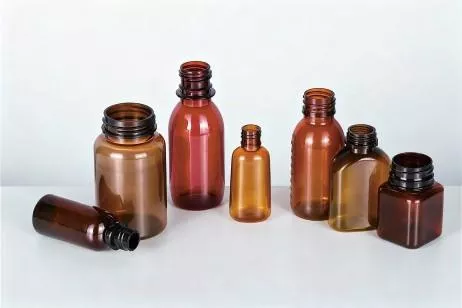
GMP Compliance — How ISBM Meets Pharmaceutical Manufacturing Standards
Hygienic Closed Production Environment
GMP (Good Manufacturing Practice) regulations for pharmaceutical packaging require that packaging components be produced in environments that minimize contamination risk from airborne particles, human contact, and environmental microorganisms. ISBM’s integrated one-step process inherently supports GMP compliance — PET or PP resin pellets enter the machine in sealed bags, are melted under controlled temperature conditions, and emerge as finished bottles with minimal human handling at any stage of the production process. The closed nature of the ISBM process — where bottles are formed, cooled, and discharged without exposure to open air or manual handling during production — minimizes contamination vectors that would require additional cleanroom controls in alternative production processes.
For pharmaceutical applications requiring the highest levels of hygienic production, ISBM machines can be installed in ISO Class 7 or ISO Class 8 cleanroom environments (equivalent to GMP Grade C or D) with HEPA-filtered air supply, positive pressure cleanroom controls, and gowning protocols. The machine’s compact footprint facilitates economical cleanroom installation compared to two-machine two-step SBM systems, reducing the cleanroom area required and the associated HVAC and validation costs.
Dimensional Consistency — Critical for Child-Resistant Closure Compliance
Pharmaceutical tablet and capsule bottles sold in consumer retail channels in the United States, European Union, and many other markets must use child-resistant (CR) closures complying with standards such as 16 CFR 1700 (U.S. CPSC Poison Prevention Packaging Act) and EN ISO 8317 (European CR packaging standard). The reliable function of child-resistant closure mechanisms — whether push-and-turn, squeeze-and-turn, or palm-and-turn designs — depends critically on precise dimensional compatibility between the bottle neck finish and the CR closure. ISBM’s injection-molded neck finish delivers neck thread tolerances of ±0.1mm and neck outer diameter tolerances consistent enough to ensure reliable CR closure function across the full production volume, eliminating the closure application failures and CR mechanism malfunctions that can result from dimensional variation in EBM or injection-molded bottle necks produced with less precise tooling.
Moisture Vapor Transmission Rate (MVTR) Control
Many tablet and capsule pharmaceutical products are moisture-sensitive — exposure to humidity causes hydrolytic degradation of active ingredients, physical deterioration of tablet coatings, and microbiological contamination risk in hygroscopic formulations. USP 661 (Containers — Plastics) classifies pharmaceutical plastic containers by their moisture permeability performance, with Class A (tight containers) requiring MVTR below 0.5 mg/(day·container) for 100ml containers under standard test conditions. ISBM-produced PET pharmaceutical bottles achieve excellent MVTR performance due to PET’s inherent low moisture permeability combined with the further barrier enhancement provided by biaxial orientation. PP (polypropylene), also processable in ISBM machines, offers even lower MVTR than PET and is frequently preferred for pharmaceutical applications requiring the tightest moisture barrier performance.
Process Validation & Batch Traceability
Pharmaceutical GMP requires that all manufacturing processes be formally validated to demonstrate that they consistently produce products meeting their specifications. ISBM machines for pharmaceutical bottle production support formal process validation through comprehensive data logging capabilities that record process parameters (injection temperature, blow pressure, mold temperature, cycle time, servo motor performance) for every production cycle. This data logging provides the process traceability documentation required for pharmaceutical GMP compliance and regulatory submission, and enables statistical process control (SPC) analysis to demonstrate process stability and capability (Cpk values) for each critical bottle dimension.
Material Options for Pharmaceutical Tablet & Capsule Bottles
| Bahan | USP Class | Key Properties | Best Application |
|---|---|---|---|
| PETI | USP Class VI | High clarity, good MVTR, chemical resistance, FDA-compliant | OTC tablets, vitamins, nutraceuticals requiring clear packaging |
| PP | USP Class VI | Excellent MVTR, chemical resistance, autoclavable, FDA-compliant | Prescription Rx bottles, moisture-sensitive tablets, capsules |
| HDPE | USP Class VI | Lowest MVTR, excellent chemical resistance, opaque | Light-sensitive tablets, high-barrier pharmaceutical packaging |
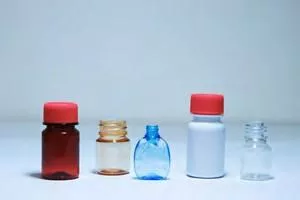
Common Pharmaceutical Bottle Specifications
| Permohonan | Isipadu Lazim | Neck Finish | Closure Type | Key Standard |
|---|---|---|---|---|
| Rx Prescription | 30–150ml | 33mm / 38mm | Child-resistant (CR) | 16 CFR 1700 / USP 671 |
| OTC Tablets | 60–500ml | 33mm / 38mm / 45mm | CR or senior-friendly | USP 661 / FDA 21 CFR |
| Vitamins / Nutraceuticals | 100–1,000ml | 38mm / 45mm / 53mm | Flip-top / press-turn CR | FDA 21 CFR 177.1630 |
| Institutional Dispensing | 500–1,000ml+ | 53mm / 63mm | Screw cap / desiccant cap | USP 661 Class A |
Production Efficiency — Multi-Cavity Output for Pharma Volume Demands
Pharmaceutical tablet and capsule bottle production is characterized by large volume requirements — major OTC pharmaceutical brands may require hundreds of millions of bottles annually — combined with stringent quality requirements that make production efficiency and consistent quality equally important priorities. ISBM machines address both requirements through multi-cavity tooling and comprehensive automated quality monitoring:
- Cavity count: 4–16 cavities for standard pharmaceutical bottle formats (60–500ml), with cycle times of 5–8 seconds yielding 1,800–11,520 bottles per hour per machine
- Dimensional CPK: Multi-cavity ISBM tooling achieves CPK values above 1.33 for critical neck finish dimensions — the minimum acceptable process capability for pharmaceutical packaging applications
- Automated inspection: Inline vision systems check every bottle for visual defects, weight checkers verify bottle weight within ±1g, and leak testers confirm neck seal integrity at production line speed
- Data logging: Complete process parameter recording for every production cycle supports batch traceability and GMP documentation requirements
Regulatory Compliance Framework
ISBM-produced pharmaceutical tablet and capsule bottles must comply with a comprehensive framework of international pharmaceutical packaging regulations and standards:
- USP 661 — Containers — Plastics: defines container classification (tight, well-closed, hermetic) and testing requirements
- USP 671 — Container Permeation: moisture vapor transmission rate testing for plastic pharmaceutical containers
- 21 CFR 211.94 — FDA regulations for drug product containers and closures
- EU GMP Annex 1 & 15 — European GMP requirements for sterile and non-sterile pharmaceutical manufacturing environments
- ICH Q1A–Q1F — Stability testing guidelines requiring packaging compatibility validation
- ISO 15223-1 — Symbols for medical devices and pharmaceutical packaging
- 16 CFR 1700 — U.S. CPSC child-resistant packaging requirements for pharmaceutical products
Aplikasi Pasaran Global
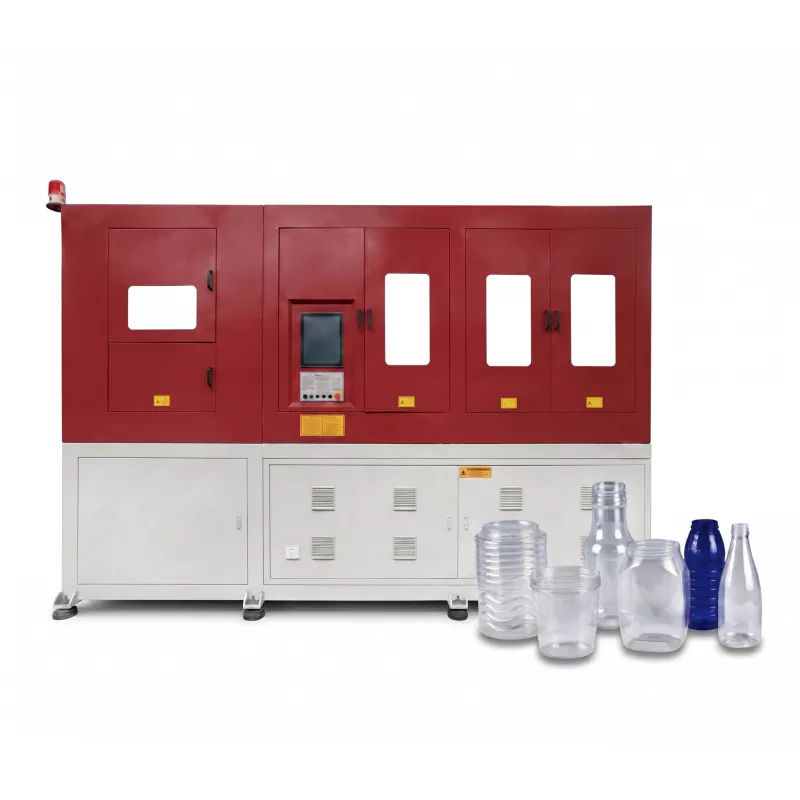
ISBM machines for pharmaceutical tablet and capsule bottle production serve the full global pharmaceutical supply chain — from major multinational pharmaceutical manufacturers producing branded OTC products for global distribution, to generic pharmaceutical manufacturers supplying cost-competitive tablet and capsule products in regulated markets, to nutraceutical and dietary supplement brands in the rapidly expanding global wellness category. Key manufacturing markets include India (the world’s largest generic pharmaceutical exporter), China, the United States, Germany, and a rapidly growing tier of emerging pharmaceutical manufacturing centers in Southeast Asia, Latin America, and Eastern Europe.
Terokai Kandungan Berkaitan
- Layari kami ISBM Machine range including GMP-compatible models for pharmaceutical bottle production.
- Terokai kami pharmaceutical and medical packaging solutions covering tablets, oral liquids, and healthcare product packaging.
- Learn more about Ever Power HG and our experience serving global pharmaceutical packaging customers.
GMP-Grade Pharmaceutical Bottle Production Starts with the Right ISBM Machine
Ever Power HG’s ISBM machines deliver the dimensional precision, hygienic production capability, and process traceability that pharmaceutical tablet and capsule bottle manufacturers require for GMP compliance. Our engineering team will recommend the optimal machine configuration, cleanroom integration approach, and validation support for your pharmaceutical packaging requirements.