What Is the Difference Between One-Step and Two-Step ISBM Machines?
Selecting between a one-step (single-stage) and a two-step (two-stage) injection stretch blow molding machine is one of the most consequential equipment decisions a packaging manufacturer will make. The two configurations share the same goal — producing biaxially oriented plastic containers — but their engineering philosophies, economic models, and ideal applications differ substantially. Getting this choice wrong means mismatched production capacity, excessive energy costs, or inflexible tooling for years into the future.
This guide provides a thorough technical and commercial comparison to help process engineers, plant managers, and procurement teams make the right decision for their specific production environment.
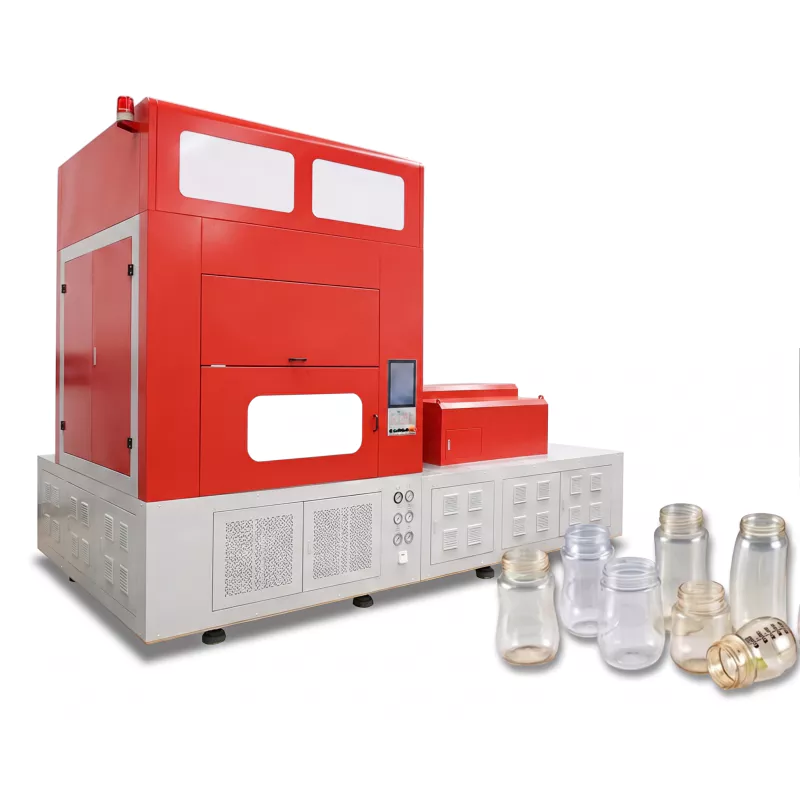
What Is a One-Step ISBM Machine?
A one-step ISBM machine, also referred to as a single-stage machine, performs the entire bottle-making process within a single integrated unit without the preform ever cooling to ambient temperature. The four operations — injection molding of the preform, temperature conditioning, stretch-blow molding, and bottle ejection — occur in sequence on a continuously rotating turntable, typically with four indexed stations.
The defining characteristic is thermal continuity: the preform retains a substantial portion of the heat invested during injection molding, which is then sculpted by the conditioning station into the precise temperature profile required for biaxial orientation. This avoids a full reheat cycle, making one-step machines significantly more energy-efficient on a per-bottle basis for low- to mid-volume production.
- 4-station rotary indexing table (injection → conditioning → blow → eject)
- 1 to 6 cavities per set (larger cavity sets on high-output models)
- Preform designed specifically for the machine’s tooling geometry
- Machine footprint: compact, typically 3–8 m² floor area
- Suitable output: 500 to 6,000 bottles/hour depending on model and bottle size
What Is a Two-Step ISBM Machine?
A two-step ISBM system separates the injection molding and blow molding operations into two physically and temporally independent machines. In the first step, preforms are injection molded in high-cavitation injection molding machines (often 24, 48, or 96 cavity hot-runner molds), cooled fully to ambient temperature, and either used immediately or stored in bulk bags for later use. In the second step, the cold preforms are fed into a reheat stretch blow molding (RSBM) machine, where IR lamps bring them back to the blow temperature before stretch-blowing into finished bottles.
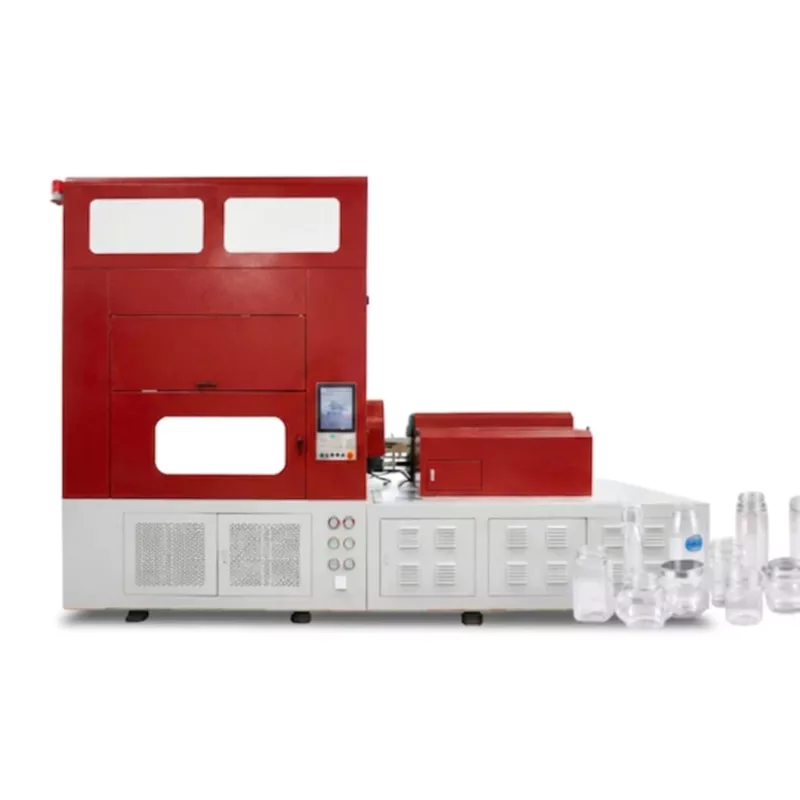
- Separate high-cavitation injection machine (24–96 cavities) + reheat blow machine
- Preform supply: internal injection or external purchased preforms
- High-output blow machine: 2–24+ cavities with rotary or linear carousel
- Typical output: 6,000 to 80,000+ bottles/hour (industrial beverage lines)
- Preform flexibility: any compatible preform can be used from any supplier
Head-to-Head Comparison
| Criterion | One-Step ISBM | Two-Step RSBM |
|---|---|---|
| Process integration | All-in-one machine | Two separate machines + preform handling |
| Output capacity | 500–6,000 BPH | 6,000–80,000+ BPH |
| Energy efficiency | Higher (retained heat from injection) | Lower (full reheat of cold preform) |
| Floor space | Compact (one machine) | Large (two machines + storage area) |
| Initial CAPEX | Lower | Higher (two machines) |
| Tooling flexibility | Preform tied to machine design | Any compatible preform can be used |
| Preform storage | Not required — made and blown inline | Required (warehouse or silo) |
| Neck finish precision | Excellent (injection accuracy, never deformed) | Good (depends on preform quality and handling) |
| Bottle geometry capability | Complex shapes, wide-mouth, tall-neck | Standard round/oval, high-symmetry shapes |
| Best applications | Pharma, cosmetics, specialty food, medical | PET water, CSD, juice at industrial scale |
Advantages of One-Step ISBM in Detail
Kecekapan Tenaga
Retained injection heat reduces the energy needed in the conditioning station by 30–50% versus a full reheat cycle. This translates directly to lower kWh per 1,000 bottles produced, a significant advantage for medium-volume operations.
Superior Neck Precision
Because the preform neck is injection-molded to its final dimensions and never reheated or mechanically handled as a separate component, dimensional consistency of threads, support ledges, and transfer bead is maximally accurate — critical for pharmaceutical closure systems and tamper-evident caps.
Wide Geometry Capability
One-step machines can produce wide-mouth jars, asymmetric containers, containers with very short bodies or very complex shoulder geometries — forms that are difficult to reheat uniformly in a linear IR oven for two-step processing.
Lower Total Investment for Mid-Scale
A single machine purchase, single set of utilities, and no preform logistics infrastructure makes the entry point and ongoing overhead lower for operations producing up to 3–5 million bottles per year per SKU.
Advantages of Two-Step ISBM in Detail
The two-step approach dominates wherever throughput at scale is the primary requirement. One-step ISBM machines cannot compete with the output rates achievable by multi-cavity linear blow machines running 24 hours per day on a single bottle design.
| Two-Step Advantage | Why It Matters |
|---|---|
| Throughput up to 80,000+ BPH | Essential for water and CSD beverage bottlers serving mass retail markets |
| Decoupled preform supply | Can purchase preforms from multiple suppliers; price and quality can be optimised independently |
| Blow machine flexibility | Same blow machine can run different preforms with mold changeover; preforms from different designs stocked simultaneously |
| Lower blow tooling cost per unit volume | At 12, 18, 24 blow cavities, tooling cost per bottle is dramatically lower than single-digit cavitation one-step tooling |
Ideal Application Matching
Choose One-Step ISBM for:
- Pharmaceutical bottles (syrup, tablets, eye drops)
- Premium cosmetic containers (PETG, complex geometry)
- Medical device components (dimensional precision critical)
- Wide-mouth jars and specialty food packaging
- Multiple SKUs on one machine (frequent mold changes)
- New businesses and capacity ramp-ups
- Contract packaging with diverse product range
Choose Two-Step RSBM for:
- PET still water bottles at industrial volume
- Carbonated soft drink (CSD) PET bottles
- Juice and isotonic drink bottles
- Dedicated single-product high-volume lines
- Operations where preform sourcing flexibility is strategic
- Beverage companies with existing preform supplier networks
Cost Comparison Framework
| Cost Element | One-Step ISBM | Two-Step RSBM |
|---|---|---|
| Machine CAPEX | $40,000–$250,000 | $300,000–$2,000,000+ (two machines) |
| Mold cost (2 cavity) | $15,000–$40,000 | Preform mold $30,000–$80,000 + blow mold $20,000–$60,000 |
| Energy per 1,000 bottles | Lower (retained heat) | Higher (full reheat + IM energy) |
| Labor requirement | 1 operator per machine | 1–2 operators per line (more equipment to monitor) |
| Preform storage cost | Zero (no preform inventory) | Significant (warehouse space, handling equipment) |
For further guidance on specifying the right machine configuration for your project, contact our technical sales team. We can model output requirements and total cost of ownership for both approaches based on your specific bottle design, material, and volume targets.
Frequently Asked Questions
Can a one-step ISBM machine run the same preform designs as a two-step machine?
At what output volume does two-step become more economical than one-step?
Does one-step or two-step produce better optical clarity?
Which process is easier to validate for pharmaceutical GMP compliance?
Not Sure Which Configuration Fits Your Production?
Share your bottle specification, material, and target volume with us and we will recommend the right machine type and cavitation level.