
Why PET Is the Global Standard for Water Bottle Packaging
The global bottled water market continues to expand at a remarkable pace, driven by rising health consciousness, urbanization, and demand for safe drinking water across developing and developed economies alike. At the heart of this booming industry lies a critical manufacturing technology: the ISBM machine — Injection Stretch Blow Molding machine — which has become the preferred solution for producing high-clarity, lightweight, and structurally consistent PET mineral water and purified water bottles.
Polyethylene terephthalate — universally known as PET — has dominated the bottled water packaging sector for over three decades. Its combination of outstanding optical clarity, excellent mechanical strength, chemical inertness, and recyclability makes it the material of choice for mineral water and purified water producers worldwide.
Compared to glass, PET bottles are approximately 90% lighter, dramatically reducing transportation costs and carbon emissions across the supply chain. Compared to HDPE, PET offers far superior transparency, allowing consumers to visually verify product clarity. Compared to PP, PET provides better gas barrier properties that help maintain product freshness over extended shelf life.
In the context of purified water packaging — where regulatory standards for food contact materials are stringent — PET’s compliance with FDA, EU food contact regulations, and international food safety standards makes it an uncontested choice. ISBM machines processing PET produce bottles in a closed, contamination-controlled environment, further reinforcing food safety and hygiene assurance.
How ISBM Technology Works for Water Bottle Production
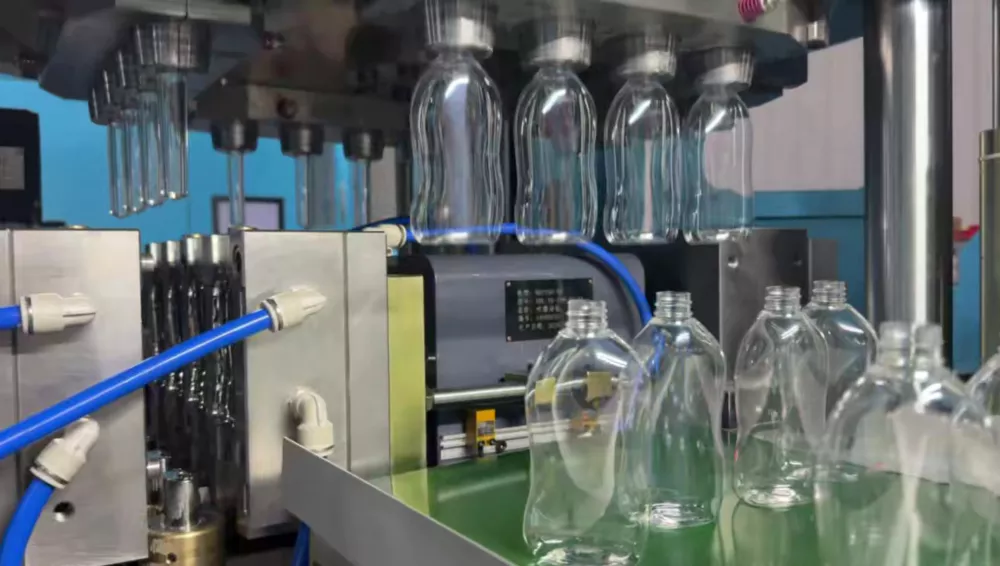
The one-step Injection Stretch Blow Molding process integrates three manufacturing stages — injection molding, stretch orientation, and blow molding — into a single continuous operation within one machine. This fundamental characteristic differentiates ISBM from conventional two-step (reheat stretch blow molding) processes and delivers significant advantages for water bottle production.
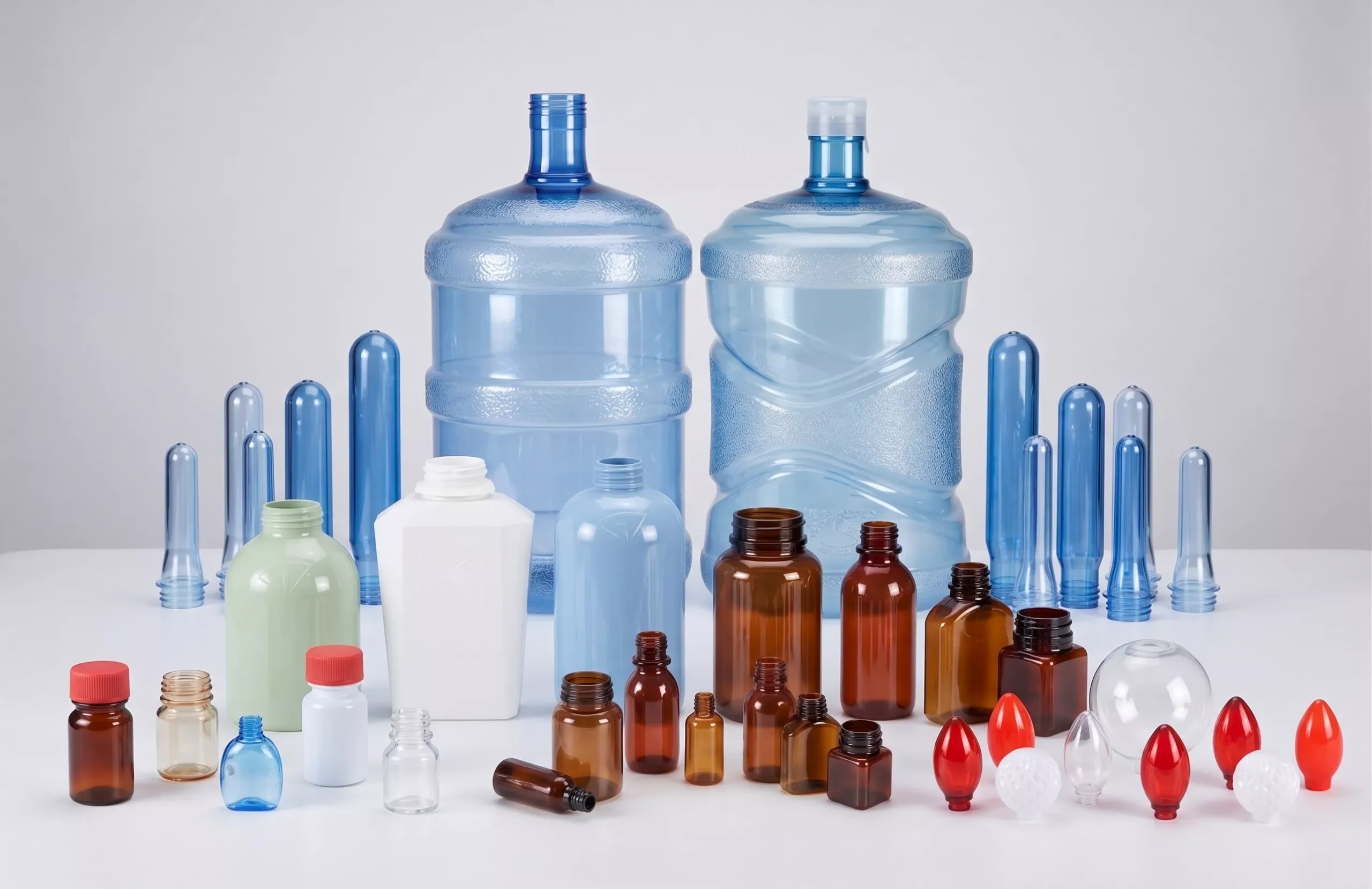
In the ISBM process, PET resin pellets are first fed into the injection unit, where they are melted and injected under high pressure into a precision injection mold to form a preform — a test-tube-shaped intermediate with a fully formed neck finish. The preform is then transferred, while still retaining its injection heat, to the conditioning station where temperature is precisely adjusted to optimize stretch orientation. The conditioned preform is subsequently transferred to the blow molding station, where a stretch rod extends axially while high-pressure air (2.0–3.5 MPa) simultaneously expands the preform radially into the final bottle shape.
The critical advantage of this integrated process is the elimination of the preform reheating step required in two-step SBM. Because the preform retains its injection heat throughout the process, ISBM machines consume approximately 40% less energy per bottle produced compared to reheat SBM systems.
Furthermore, because the neck finish is formed during the injection stage, ISBM produces bottle necks with exceptional dimensional accuracy. Neck thread tolerances are maintained within ±0.1mm, ensuring consistent and reliable sealing with closure systems — critical for water bottles where cap-to-neck sealing integrity directly impacts shelf life and leak prevention.
Key Advantages of ISBM Machines for Water Bottle Production
Exceptional Optical Clarity
ISBM-produced PET water bottles achieve haze values below 2%, delivering glass-like transparency that allows consumers to visually assess product clarity and purity. This optical performance is a direct result of the biaxial molecular orientation achieved during the stretch blow phase, which aligns PET polymer chains in both axial and radial directions, producing a highly uniform, transparent bottle wall structure.
Lightweight Design with Structural Integrity
Biaxial orientation dramatically enhances the mechanical properties of the bottle wall. Oriented PET exhibits significantly higher tensile strength, impact resistance, and top-load performance compared to unoriented material of the same weight. This allows ISBM producers to reduce bottle wall thickness — lightweighting — while maintaining or improving structural performance, lowering material costs per unit and reducing carbon footprints.
High-Speed Production with Short Cycle Times
Modern ISBM machines are capable of cycle times as short as 4–6 seconds per cycle, enabling production outputs of several thousand bottles per hour depending on cavity count and bottle size. Multi-cavity mold configurations — available in 2, 4, 6, 8, and higher cavity counts — multiply per-cycle output proportionally.
Energy Savings of Up to 40%
The elimination of the preform reheating step in ISBM results in energy consumption approximately 40% lower than equivalent two-step SBM production. Advanced servo motor drive systems further reduce electrical consumption. Servo-driven turntables, injection units, and blow mold clamping mechanisms operate with precision-controlled torque and speed, consuming energy only when performing work.
Precision Neck Dimensions for Reliable Sealing
ISBM’s injection-molded neck finish delivers neck thread tolerances of ±0.1mm, significantly tighter than EBM alternatives. This dimensional consistency eliminates seal failures, reduces cap application torque variability on automated capping lines, and prevents leakage during transport and retail handling.
Material Options for Water Bottle Production
While standard PET remains the dominant material for mineral water and purified water bottles, ISBM machines are designed to process a range of alternative materials that address specific market requirements.
| Material | Key Properties | Best Suited For |
|---|---|---|
| PET | High clarity, lightweight, excellent barrier, recyclable | Standard mineral & purified water bottles |
| PETG | Enhanced clarity, improved impact resistance, good chemical resistance | Premium water bottles, specialty packaging |
| rPET | Recycled content, reduced carbon footprint, food-grade certified | Sustainable packaging lines meeting rPET content targets |
| Tritan | BPA-free, shatter-resistant, excellent clarity | Reusable water bottles, premium hydration products |
Bottle Specifications & Size Range
ISBM machines for water bottle production offer extraordinary flexibility in bottle size, shape, and specification. From compact 100ml single-serve formats to 20L large-format containers for water dispensers, ISBM technology accommodates the full spectrum of water packaging requirements.
| Bottle Volume | Typical Application | Neck Diameter Range | Recommended Cavity Count |
|---|---|---|---|
| 100–250ml | Single-serve, airline, vending | 17–25mm | 6–12 cavities |
| 330–600ml | Standard retail, convenience | 25–38mm | 4–8 cavities |
| 750ml–1.5L | Family size, supermarket retail | 38–62mm | 2–4 cavities |
| 2L–20L | Large format, water dispensers | 62–140mm | 1–2 cavities |
Production Efficiency — Multi-Cavity Molds & Full Automation
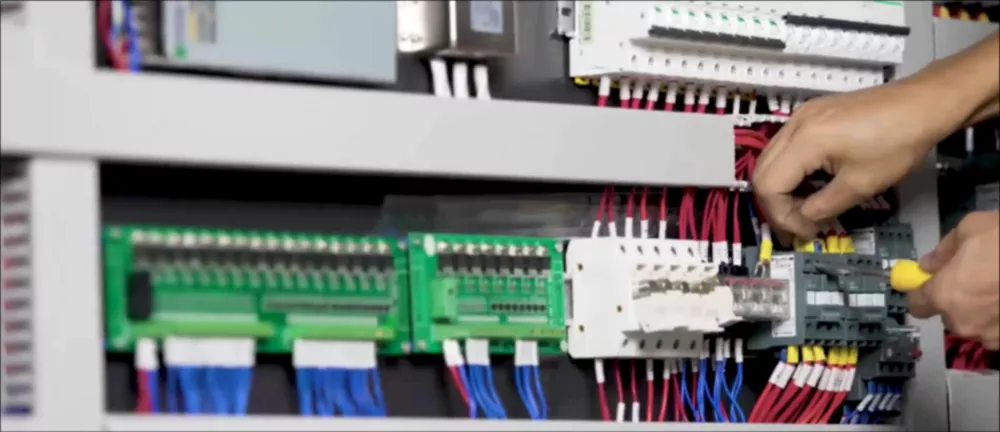
Modern ISBM machines for water bottle production are engineered for unattended, continuous operation. Integrated PLC control systems monitor and regulate injection temperature, blow pressure, mold temperature, cycle timing, and servo motor performance parameters in real time. Alarm systems detect process deviations and automatically adjust parameters or halt production to prevent defective bottle output.
Multi-cavity mold tooling is a key productivity multiplier for water bottle producers. A 4-station ISBM machine equipped with an 8-cavity mold produces 8 finished bottles per cycle. At a cycle time of 6 seconds, this equates to 4,800 bottles per hour from a single machine footprint. Larger cavity counts — 10, 12, or 14 cavities on appropriate machine platforms — can further increase hourly output proportionally.
Servo motor drive systems on advanced ISBM platforms reduce preform weight variation to less than 0.5% between cycles and apply consistent, repeatable clamping force, eliminating flash and parting line defects. These automation capabilities collectively reduce operator intervention requirements, enabling lean manufacturing operations with minimal labor per unit of output.
Quality Standards & Regulatory Compliance
Water bottle producers supplying major retail chains, government water programs, or export markets must meet stringent quality and regulatory requirements. ISBM-produced PET water bottles are engineered to comply with the following key standards:
- FDA 21 CFR — U.S. Food and Drug Administration food contact material regulations
- EU Regulation 10/2011 — European Union plastic materials in contact with food
- GB 9685 — Chinese national standard for food contact materials and additives
- ISO 22000 — Food safety management systems for food chain organizations
- BRC/IOP — British Retail Consortium packaging standards for major retail supply chains
- NSF/ANSI 61 — Drinking water system components health effects standards
Global Market Applications & Industry Fit
ISBM machines for mineral water and purified water bottle production serve a diverse global customer base spanning multiple market segments and geographies.
Established Beverage Brands
Major mineral water and purified water brands requiring high-volume, consistent-quality bottle production for national distribution networks.
Regional Water Producers
Mid-scale regional bottled water companies seeking to bring bottle production in-house for cost control and supply chain independence.
Water Treatment Plants
Municipal and private water treatment facilities adding bottling capability for purified drinking water distribution in water-scarce regions.
Private Label Producers
Contract manufacturers and private label water producers supplying supermarket chains, hospitality groups, and airline catering operations.
Geographically, demand for ISBM water bottle production equipment is strongest in Southeast Asia, South Asia, the Middle East, Africa, and Latin America — regions where bottled water consumption is growing rapidly alongside improving living standards and increasing awareness of waterborne disease prevention.
Explore Related Content
- Browse our full range of ISBM Machines to find the right model for your water bottle production line.
- Discover our complete Packaging Solutions covering beverage, food, pharmaceutical, and personal care applications.
- Learn more about Ever Power HG and our 20+ years of blow molding machine expertise.
Ready to Upgrade Your Water Bottle Production Line?
Ever Power HG’s ISBM machines deliver proven performance for mineral water and purified water bottle manufacturing. Our engineering team is ready to recommend the right machine model, cavity count, and mold specification for your production targets and budget.