
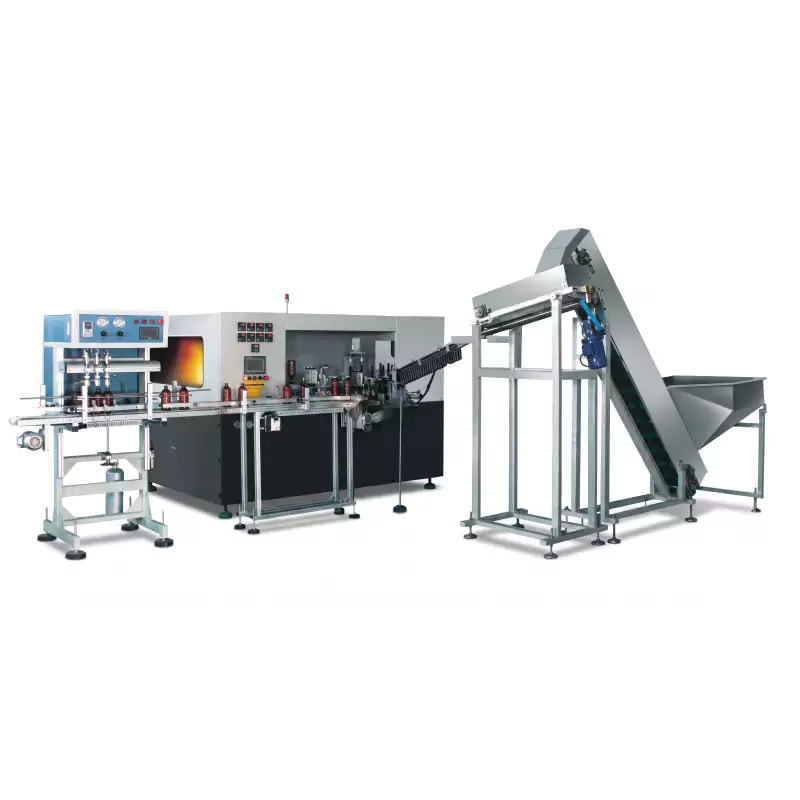
Chemical & Pesticide
Bottle Blow Molding
Machines
Fully automatic PET blow molding machines for agrochemical containers, industrial chemical bottles, pesticide bottles, and cleaning product packaging. The EP-HGA ES and JS series cover the full volume range from small-format pesticide bottles to large industrial chemical containers — zero hand-contact, CE certified, servo-driven, factory direct.
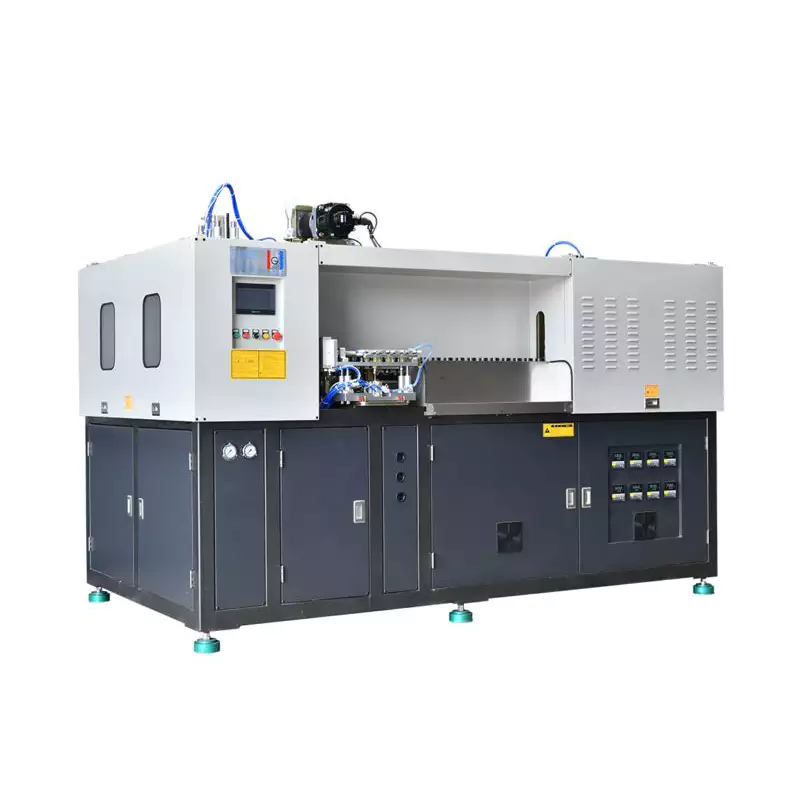
PET for Chemical & Agrochemical Packaging
Why Chemical and Agrochemical Producers Choose PET Blow Molding
PET is the dominant material for liquid agrochemical and industrial chemical containers in the 200 ml to 5-litre range — used for herbicides, pesticides, fungicides, fertiliser concentrates, industrial cleaning chemicals, and specialty chemicals across global markets. The EP-HGA ES series covers the full volume and output range for this sector, from compact 4-cavity 700 ml production at high output rates to large 5-litre industrial container formats.
PET provides the chemical resistance profile needed for the most common agrochemical formulations, with the optical clarity that allows contents and fill level to be checked without opening the container — a practical requirement across distribution and point-of-use checking. The biaxial orientation inherent in the two-step RSBM process improves the pressure resistance of the container wall versus extrusion blow moulded alternatives, important for containers holding liquid concentrates under variable temperature and pressure conditions.
For producers who need to cover both chemical bottle production and other packaging applications from a single machine, several models in this category — particularly the ES-4C100 with its six-application coverage — are designed for multi-industry use. For the largest industrial chemical containers above 5 litres, see the Large Capacity Barrel Machines category. For a semi-automatic option at lower annual volume, see the EP-HGS semi-automatic series.
EP-HGA ES & JS Series — Machines
Chemical & Pesticide Bottle Blow Molding Machines
All machines share the same servo drive platform, digital PLC multi-zone infrared heating, zero hand-contact production cycle, and CE certification. Select by cavity count and container volume to match your production target.
EP-HGA.ES-4C76
4-cavity machine for the standard 700 ml chemical and pesticide bottle format — the most widely used small-format container size across agrochemical retail and distribution packaging globally. High-output 4-cavity configuration for mid-to-large annual volume chemical bottle production.
EP-HGA.ES-4C100
4-cavity machine covering six application industries including chemical and pesticide packaging. The 800 ml maximum volume and 100 mm mold-close dimension extend coverage to slightly larger container formats than the ES-4C76, while maintaining 4-cavity high-output production across all application sectors.
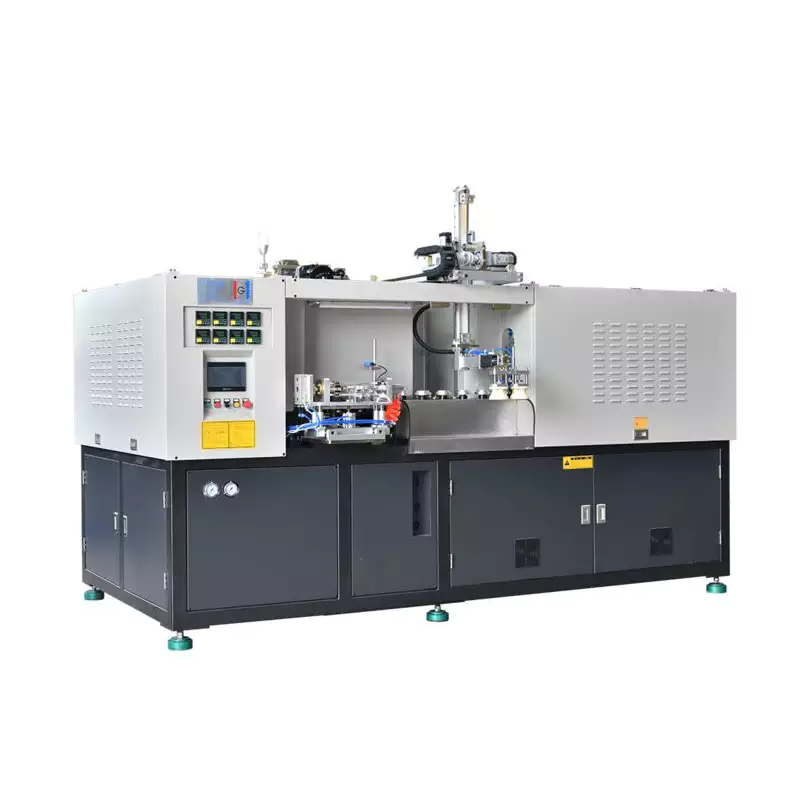
EP-HGA.ES-2C130
2-cavity machine for mid-format chemical and pesticide containers up to 1,500 ml — the 1-litre and 1.5-litre format range used for premium agrochemical concentrate packaging, industrial cleaning chemical bottles, and specialty chemical containers where larger-format bottles are required.
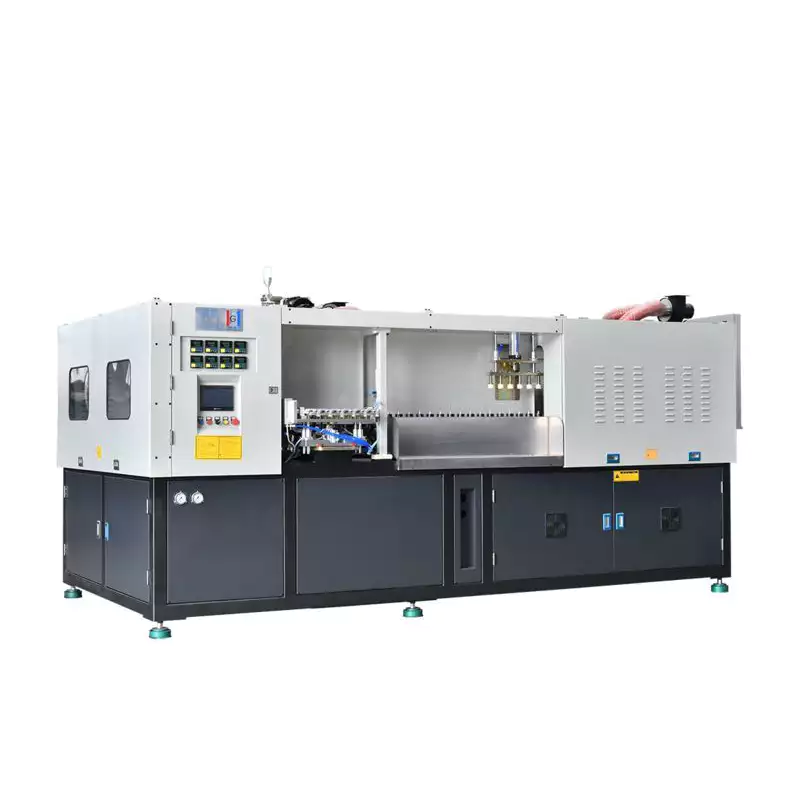
EP-HGA.ES-6C76
6-cavity high-output machine for 700 ml chemical and pesticide bottles — 50% more output per cycle than the 4-cavity ES-4C76 at the same container volume. For producers with annual chemical bottle volumes that justify the higher investment in 6-cavity tooling and machine configuration.
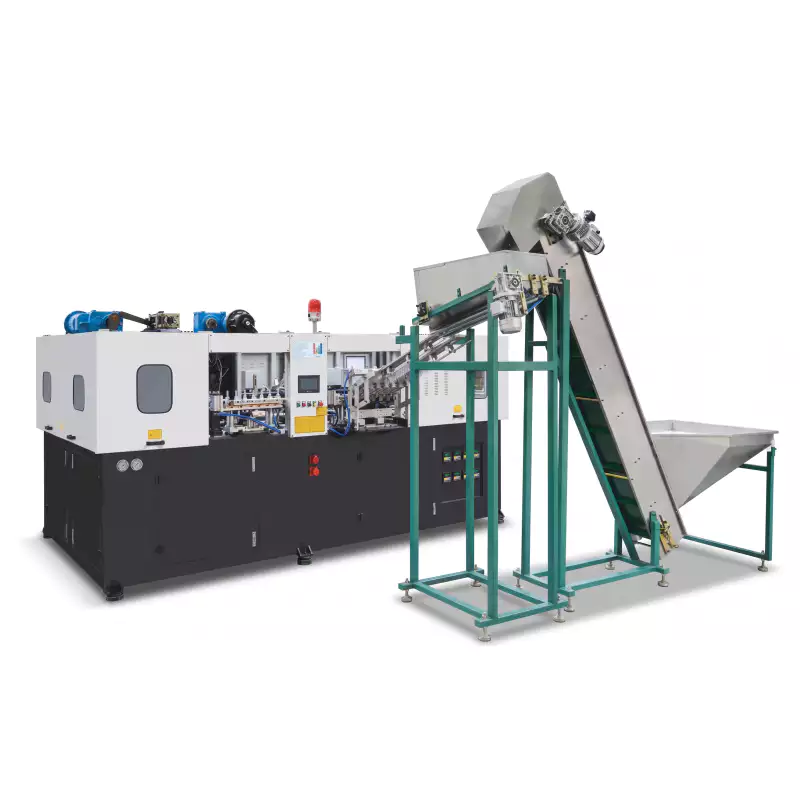
EP-HGA.ES-8C76
8-cavity machine — the highest-output configuration for 700 ml chemical and pesticide bottle production in the EP-HGA range. For large-scale agrochemical packaging operations where maximum output per installed machine is the primary selection criterion.
EP-HGA.JS-2C200
JS series large-capacity machine for 5,000 ml industrial chemical containers — the correct selection when the 5-litre container geometry requires the JS series extended stretching stroke and clamping force. Covers 5-litre bulk chemical containers, industrial cleaning product drums, and large-format agrochemical packaging.
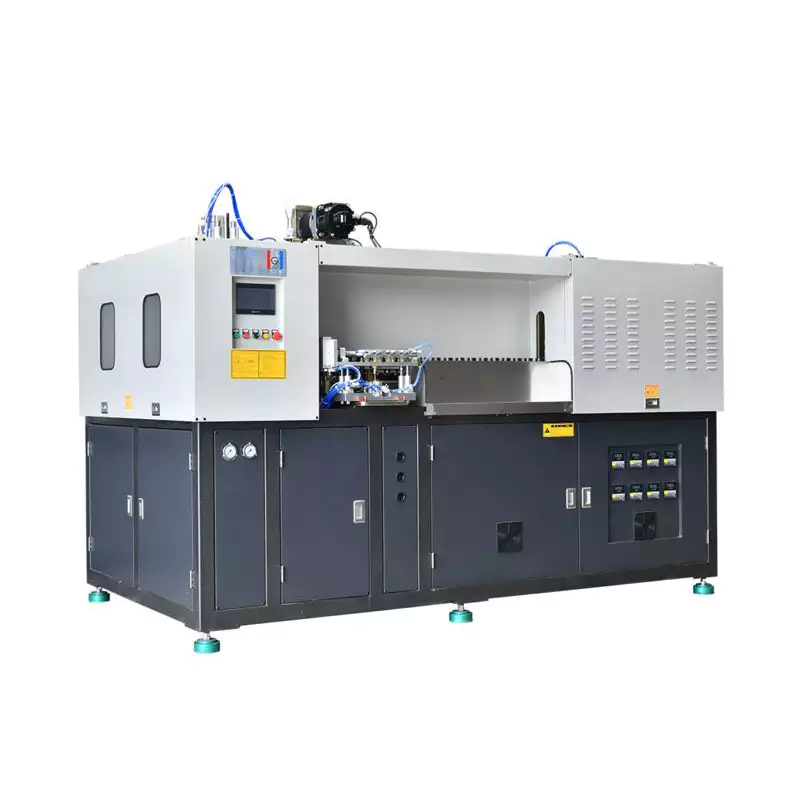
EP-HGA.ES-2C100
2-cavity machine for small-format chemical and daily chemical bottles up to 500 ml — covering cosmetic, pharmaceutical, water, and chemical packaging applications. The 100 mm mold-close dimension covers a wider body profile than the ES-4C76, suited to round chemical bottles with a larger body diameter at the same volume range.
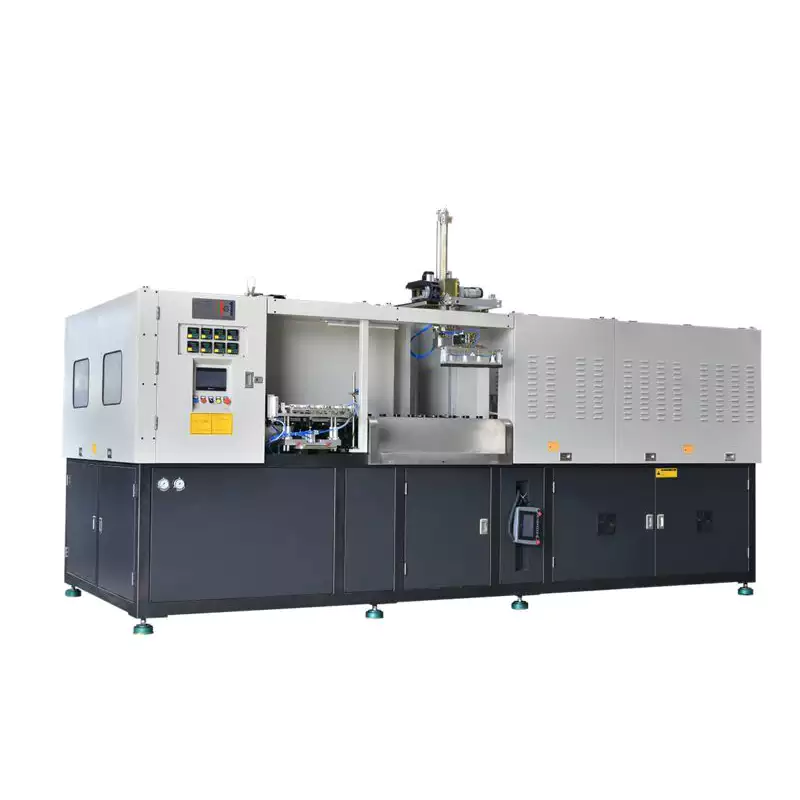
EP-HGA.ES-4C114
4-cavity machine for mid-format chemical and daily chemical bottles up to 1,300 ml. The 114 mm mold-close dimension covers the mid-volume range between the 700–800 ml small-format ES machines and the 1,500 ml larger-format configurations, suited to 1-litre and 1.25-litre chemical concentrate bottles.
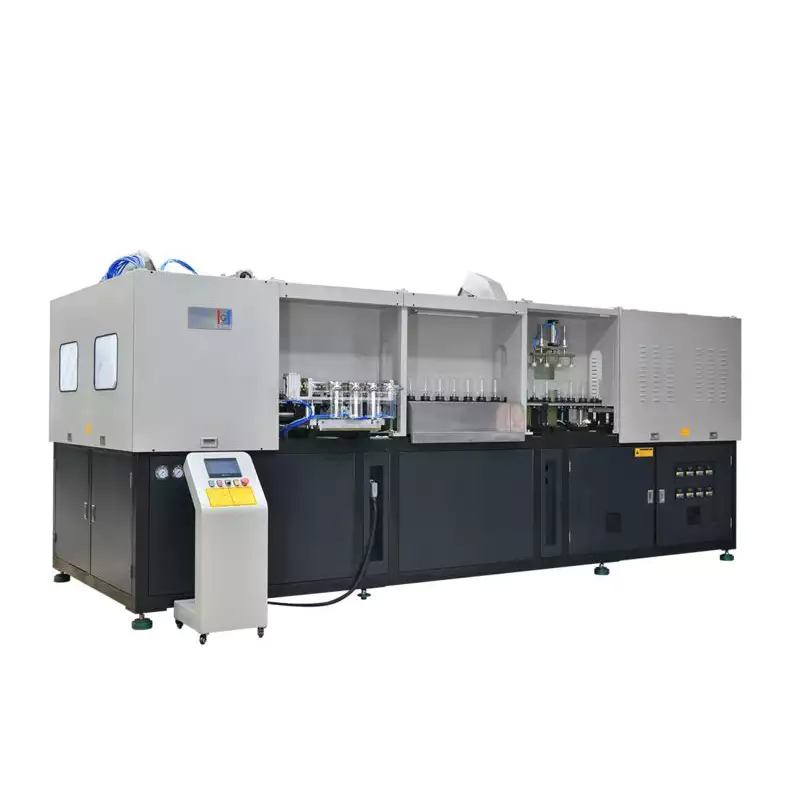
EP-HGA.ES-4C130
The highest-output standard 4-cavity configuration in the ES series — 130 mm mold-close, 1,500 ml maximum volume. For producers requiring the highest 4-cavity output at the 1.5-litre chemical container format, covering industrial cleaning chemical bottles, agrochemical concentrates, and large-format daily chemical packaging.
EP-HGA.ES-6C114
6-cavity high-output machine for 1,500 ml chemical, water, and cosmetic bottles — the highest-output configuration available at the 114 mm mold-close dimension. For high-volume chemical bottle production where 4-cavity output is insufficient and the 1.5-litre format is required, the ES-6C114 delivers 50% more output per cycle than the ES-4C130 at the same volume.
EP-HGA.JS-2C366
JS series 20-litre (5-gallon) barrel machine — for large-format chemical bulk containers and water barrel production. The 2-cavity configuration covers 20-litre industrial chemical drums, bulk agrochemical containers, and water dispenser barrels. The highest-capacity single-machine configuration for the 20-litre format in the EP-HGA range.
Side-by-Side Specification
Chemical & Pesticide Bottle Machines — Full Specification Comparison
Key selection parameters across all machines in this category, ordered by volume. All models are fully automatic, servo-driven, CE certified, and ship with complete technical documentation.
| Parameter | ES-2C100 | ES-4C76 | ES-4C100 | ES-4C114 | ES-2C130 | ES-4C130 | ES-6C76 | ES-6C114 | ES-8C76 | JS-2C200 | JS-2C366 | |
|---|---|---|---|---|---|---|---|---|---|---|---|---|
| Max. Volume | 500 ml | 700 ml | 800 ml | 1,300 ml | 1,500 ml | 1,500 ml | 700 ml | 1,500 ml | 700 ml | 5,000 ml | 5,000 ml | 20 L |
| Cavities | 2 | 4 | 4 | 4 | 2 | 4 | 6 | 6 | 8 | 2 | 2 | 2 |
| Mold-Close (mm) | 100 | 76 | 100 | 114 | 130 | 130 | 76 | 114 | 76 | 200 | 366 | |
| Series | ES | ES | ES | ES | ES | ES | ES | ES | ES | ES | JS | JS |
| Product Page | View → | View → | View → | View → | View → | View → | View → | View → | View → | View → | View → |
Full technical specifications including blow pressure, machine dimensions, heating zones, and power requirements are on each individual product page. Contact our engineering team for complete datasheets.
Container Applications
What These Machines Produce
The chemical and pesticide category covers a wide range of liquid container applications across the agrochemical, industrial cleaning, and specialty chemical sectors — all sharing the requirement for PET's chemical resistance, transparency, and barrier properties.
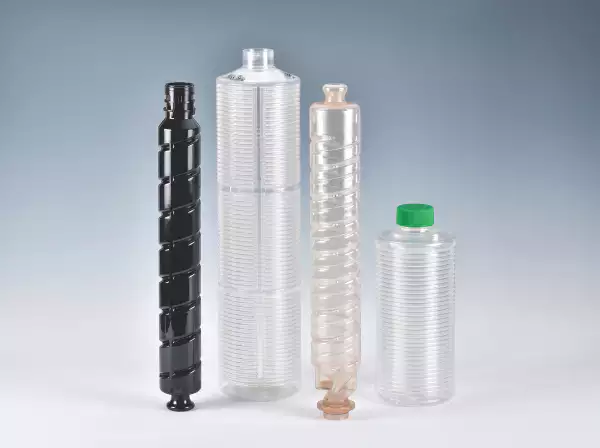
Pesticide & Herbicide Bottles
The 200 ml to 1-litre range covers retail pesticide and herbicide bottles — the standard consumer and professional agrochemical container format. PET is the preferred material for agrochemical liquid packaging due to its resistance to a wide range of active ingredient formulations and its transparency for fill-level and product-condition checking at point of use.
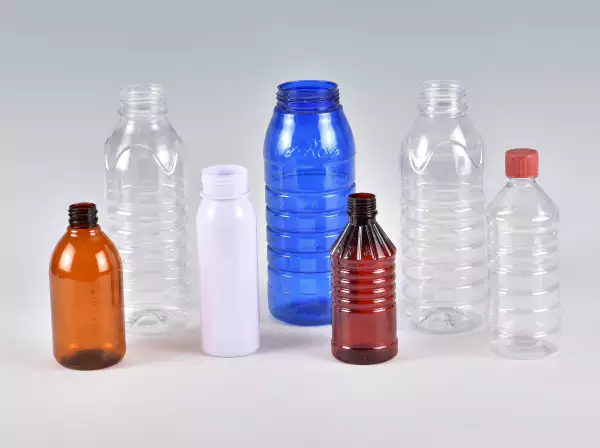
Fungicide & Fertiliser Concentrates
The 800 ml to 1.5-litre range covers fungicide and fertiliser concentrate bottles — typically larger than standard pesticide retail formats and used for professional-grade agrochemical products sold through agricultural distributors and cooperative purchasing. The ES-4C100 and ES-2C130 are the primary machines for this format range.
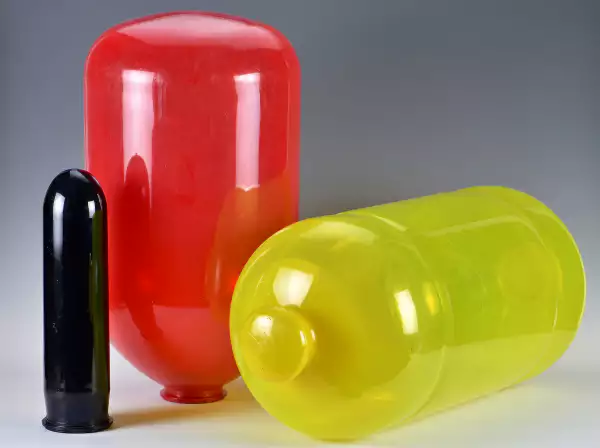
Industrial Cleaning Chemicals
Industrial cleaning chemicals, degreasers, disinfectants, and sanitation products in the 1-litre to 5-litre range — the institutional and professional cleaning market. PET's transparency provides fill-level visibility, while its chemical resistance covers the alkaline and acid cleaning formulations standard in this sector. The ES-2C130 covers this volume range.
Large Industrial Chemical Containers
5-litre bulk chemical containers for industrial distribution — automotive chemicals, specialty industrial fluids, water treatment chemicals, and bulk cleaning concentrates for institutional and industrial buyers. The JS-2C200 is the primary machine for this format when the container geometry requires the JS series extended stretching stroke.
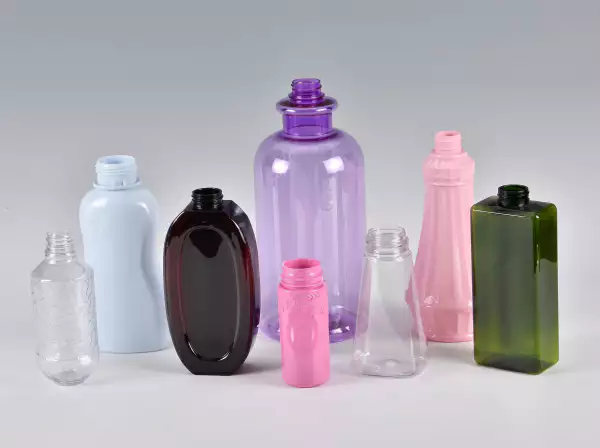
Specialty Chemicals & Reagents
Specialty chemical packaging — laboratory reagent bottles, automotive care products, pool chemicals, and specialty industrial formulations. The smaller-format ES series machines (ES-4C76, ES-4C100) cover the 200 ml to 800 ml volume range used for high-value specialty chemical packaging where moderate output volumes and PET's optical clarity are the primary requirements.
High-Volume Agrochemical Contract Packaging
Large-scale agrochemical contract packaging operations producing retail pesticide and herbicide bottles for multiple agrochemical brand customers — where maximum annual output from a single machine installation is the primary commercial requirement. The ES-6C76 and ES-8C76 deliver the highest output rates for the 700 ml standard agrochemical bottle format.
Material Suitability
PET for Chemical Packaging — What to Confirm Before Production
PET is compatible with a broad range of chemical formulations used in agrochemical and industrial chemical packaging. The following points are the practical considerations for producers evaluating PET blow moulded containers for chemical applications.
Formulation Compatibility — Always Confirm
PET provides good resistance to dilute acids, dilute alkalis, many organic solvents, and the majority of water-based agrochemical formulations. However, compatibility varies significantly by specific chemical compound, concentration, and temperature. Before committing to PET container production for a specific agrochemical formulation, confirm chemical compatibility with your formulation chemist or the preform resin supplier's chemical resistance data for the specific PET grade being used.
Biaxial Orientation — Pressure Resistance Advantage
The two-step RSBM process produces biaxially oriented PET bottles, which have substantially better pressure resistance than extrusion blow moulded bottles of the same wall thickness. For agrochemical concentrates and any container that may experience internal pressure during storage or temperature cycling, biaxially oriented RSBM-produced PET containers provide a significant safety and performance advantage over EBM alternatives.
Transparency — Fill Level and Product Checking
PET's optical clarity allows fill level and product condition to be verified without opening the container — a practical advantage across the agrochemical distribution chain. Distributors, retailers, and end users can check fill level and product appearance at any point in the supply chain, reducing handling and minimising exposure to chemical formulations during inspection.
Regulatory Compliance — UN Certification for Hazardous Goods
Agrochemical and industrial chemical containers in certain formulations and concentration ranges require UN-certified packaging for transport of hazardous goods (Class 3, 6.1, 8, etc.). PET bottles can be UN certified — confirm with your regulatory advisor and container testing laboratory whether your specific formulation and container size require UN certification, and plan container testing and approval accordingly.
Technical Advantages
Why Choose EP-HGA Machines for Chemical Bottle Production
Chemical and agrochemical packaging demands consistent quality, high output reliability, and production hygiene. The EP-HGA series is engineered to these requirements across all cavity configurations.
Servo Drive — Consistent Cycle Repeatability
Servo-driven stretch rod and mold clamping systems deliver repeatable cycle parameters — the same stretch ratio, the same blow timing, and the same mold-open sequence on every cycle. For chemical bottle production where wall thickness uniformity directly affects pressure resistance and shelf life performance, cycle repeatability is the foundation of consistent container quality across the full production run.
Multi-Zone Digital PLC Heating
Digital PLC-controlled multi-zone infrared heating provides zone-by-zone temperature calibration across the preform wall. Uniform temperature distribution before the blow station is the prerequisite for uniform wall thickness distribution in the finished bottle — critical for chemical containers where inconsistent wall thickness creates weak points under pressure or drop-impact conditions.
Scalable Cavity Count — 2 to 8
The ES series covers 2-cavity to 8-cavity configurations at the same 76 mm mold-close dimension. Producers can match cavity count to annual production volume — starting with 4-cavity and scaling to 6 or 8-cavity as demand grows — without changing the container design, preform specification, or mold tooling standard at the key 76 mm format.
Zero Hand-Contact Production Cycle
The fully automatic production cycle — from preform feed to bottle discharge — involves no human hand contact with the bottle. For chemical packaging, this is a production hygiene advantage: no contamination risk from operator contact with container interiors, and no operator exposure to chemical residue from preforms or finished bottles during production.
ES and JS Series — Volume Range 200 ml to 5 L
The combination of ES and JS series machines covers the complete volume range of the chemical and agrochemical container market — from 200 ml specialty chemical bottles to 5-litre industrial bulk containers — within a single machine platform family. Producers can standardise on the EP-HGA platform across their full product range rather than sourcing different machine platforms for different container sizes.
Factory Direct — Full Technical Support
Every EP-HGA machine ships with CE compliance documentation, hydraulic circuit drawings, electrical schematics, operator and maintenance manuals, and a recommended spare-parts list. After-sales engineering support is provided directly by Ever Power — not outsourced to regional distributors — covering installation commissioning, process troubleshooting, and ongoing maintenance across all installed markets.
Frequently Asked Questions
Common Questions About Chemical & Pesticide Bottle Machines
Find the Right Machine for Your Chemical Bottle Production
Share your container specification — volume, annual output target, chemical formulation type, and market — and our engineering team will recommend the correct machine and cavity configuration within one business day.