
Precision Packaging Demands of the Condiment Industry
Condiment bottles — encompassing soy sauce, vinegar, cooking wine, ketchup, chili sauce, oyster sauce, fish sauce, and dozens of specialty sauces and seasonings — represent one of the most technically complex segments in food packaging. The combination of highly acidic or saline liquid contents, diverse viscosity profiles, premium brand presentation requirements, and the absolute necessity of leak-free sealing integrity creates a demanding set of packaging performance criteria. The Machine ISBM — one-step Injection Stretch Blow Molding machine — addresses these demands through its precision injection-molded neck finish, exceptional wall thickness control, and flexible bottle design capability, making it the production technology of choice for leading condiment brands worldwide.
Among the most critical performance requirements for condiment packaging is neck finish precision. Condiment bottles use a diverse range of closure systems — flip-top caps with integral pourers, screw caps with induction foil seals, dispensing pumps, and specialty dispensing closures — all of which require precise neck thread geometry and dimensional consistency to achieve reliable sealing and closure function. ISBM’s injection-molded neck finish delivers this precision with thread tolerances of ±0.1mm, a level of dimensional accuracy that defines ISBM’s competitive advantage in condiment bottle production.
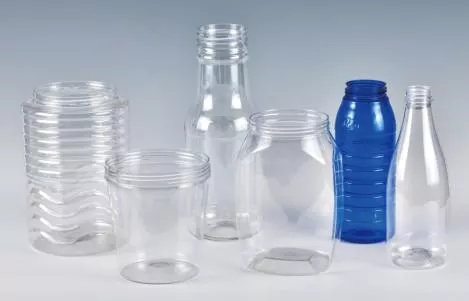
How ISBM Delivers Condiment Bottle Performance
Neck Finish Precision — The Defining Advantage
In ISBM processing, the bottle neck and thread finish are formed during the injection molding stage — not during the blow molding stage. This means the neck geometry is defined by a precision steel injection mold cavity, not by the blow molding process. The result is a neck finish with dimensional tolerances of ±0.1mm on thread outer diameter, thread pitch, and sealing surface flatness — tolerances that are simply not achievable with extrusion blow molding (EBM) processes where neck geometry is formed by the blow mold. For condiment bottles where a poorly fitting cap means a leaking bottle in the consumer’s refrigerator or pantry, this precision is commercially critical.
Chemical Resistance to Acidic & Saline Contents
Many condiment products are highly acidic — vinegar (pH 2.4–3.4), tomato ketchup (pH 3.5–4.0), and soy sauce (high sodium chloride concentration) are among the most chemically challenging food products for packaging contact. PET processed by ISBM demonstrates excellent chemical resistance to organic acids, dilute inorganic acids, and salt solutions across the full pH range relevant to condiment products. The biaxial molecular orientation achieved in ISBM further improves resistance to stress cracking that can occur in plastics subjected to prolonged contact with acidic liquids under mechanical stress — a failure mode that can result in bottle leakage during extended retail shelf life.
Design Flexibility for Brand Differentiation
The condiment category is characterized by intense brand competition, where packaging design plays a central role in brand identity and consumer purchase decisions. ISBM’s injection-molded preform approach enables a far wider range of bottle geometry options than EBM, including elliptical cross-sections, ergonomic grip zones, embossed surface textures, and complex shoulder transitions. These design features — achievable with ISBM because the preform geometry precisely defines the starting shape for the stretch-blow process — allow condiment brands to create packaging that is immediately recognizable at retail and functionally superior in consumer use.
One-Step Process Efficiency
ISBM’s one-step process — where injection, conditioning, and blow molding occur in a single machine without intermediate handling — is particularly valuable for condiment bottle production where the diversity of bottle shapes and sizes in a typical condiment producer’s product portfolio demands frequent format changes. ISBM’s integrated process means only one set of tooling (preform mold + blow mold) needs to be changed per format, compared to two separate mold sets on two separate machines in two-step SBM production. This reduces changeover time, tooling investment, and changeover-related production losses.
ISBM vs EBM for Condiment Bottles: Key Differences
| Performance Factor | ISBM | EBM |
|---|---|---|
| Neck Thread Tolerance | ±0.1mm | ±0.5mm+ |
| Wall Thickness Uniformity | ±5% (excellent) | ±15–20% (moderate) |
| Optical Clarity | Glass-like (<2% haze) | Good (HDPE opaque) |
| Complex Bottle Shapes | Excellent | Limité |
| Energy Efficiency | 40% lower (no reheat) | Moderate |
| Weld Lines / Parting Lines | None | Visible parting line |
Common Condiment Bottle Specifications
| Catégorie de produits | Typical Volume | Type de fermeture | Exigence clé |
|---|---|---|---|
| Soy Sauce | 150–1,000ml | Flip-top pourer / screw cap | Salt resistance, UV protection |
| Vinegar | 300–750 ml | Screw cap + induction seal | High acid resistance (pH 2.4) |
| Ketchup / Tomato Sauce | 340–1,000ml | Flip-top / dispensing | Squeeze flexibility, clarity |
| Chili / Hot Sauce | 150–500ml | Shaker cap / screw cap | High clarity for color display |
Oxygen & UV Barrier Options for Extended Shelf Life
Many condiment products — particularly premium soy sauce, naturally brewed vinegar, and cold-processed hot sauces — are sensitive to oxygen exposure and UV light. ISBM machines support several barrier enhancement strategies for condiment bottles requiring extended shelf life protection:
- PET incorporant un absorbeur d'UV : PET resin blended with UV absorber compounds (benzotriazoles, hydroxybenzophenones) blocks the UV wavelengths (280–380nm) that cause oxidative degradation of light-sensitive condiment ingredients, color compounds, and flavor molecules.
- Amber-tinted PET: Amber colorant in the PET matrix provides broad-spectrum light blocking comparable to traditional amber glass, widely used for premium soy sauce and specialty vinegar packaging where visual association with traditional amber glass packaging is commercially important.
- Multi-layer co-injection with EVOH: For condiment products requiring maximum oxygen barrier — premium brewed soy sauces, fermented chili pastes — ISBM multi-layer co-injection incorporating an EVOH barrier layer achieves oxygen transmission rates below 0.005 cc/(package day), extending shelf life to 18–24 months without refrigeration.
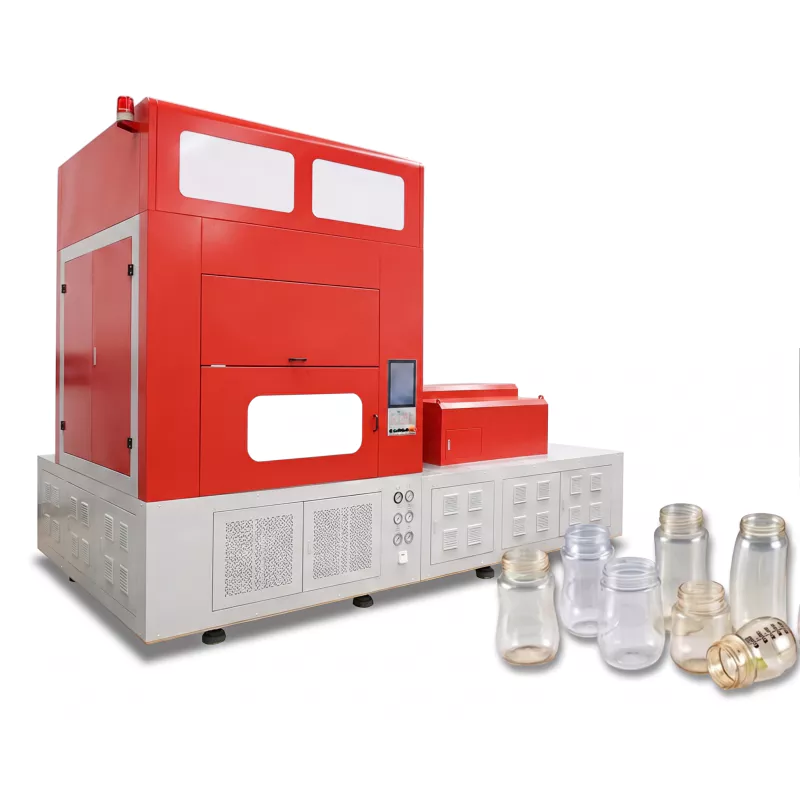
Applications du marché mondial
The global condiment and sauces market is valued at over USD 170 billion and growing steadily, driven by increasing global interest in Asian, Latin American, and Middle Eastern cuisines, the premiumization of everyday condiment categories, and the expansion of retail packaged formats in emerging markets. ISBM machine technology serves producers across this diverse global landscape:
- Asia-Pacific: The world’s largest condiment market, with soy sauce, oyster sauce, fish sauce, and chili sauce production concentrated in China, Japan, South Korea, Thailand, and Vietnam
- Europe & North America: Premium condiment growth, craft hot sauces, artisan vinegars, and specialty sauce brands requiring distinctive, high-clarity packaging
- Middle East: Large-volume production of tahini, harissa, and specialty regional condiments in glass-equivalent clear plastic packaging
- Latin America: High-volume ketchup, hot sauce, and soy sauce markets with strong demand for economy and family-size formats
Explorez le contenu associé
- Parcourez notre catalogue complet Gamme de machines ISBM to find the right platform for your condiment bottle specifications and production volume.
- Explore packaging solutions tailored to food, beverage, pharmaceutical, and personal care applications.
- Contactez notre équipe via notre page de demande de renseignements to discuss your condiment bottle project requirements.
Achieve Perfect Condiment Bottle Precision with ISBM Technology
Ever Power HG’s ISBM machines deliver the neck precision, wall uniformity, chemical resistance, and design flexibility that condiment bottle manufacturers demand. From 150ml soy sauce bottles to 1L ketchup containers, our engineering team will configure the right ISBM solution for your product range, production volume, and brand presentation requirements.