Description
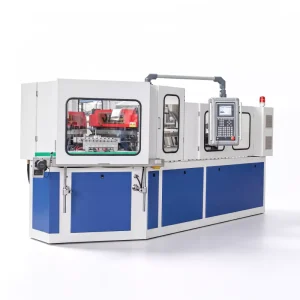
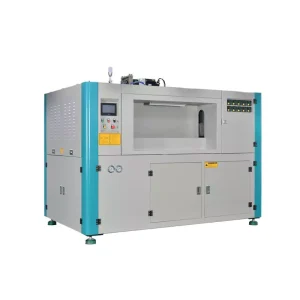
Two-Step Automatic Stretch Blow Molding Machine · RSBM · 2 Cavity
EP-HGA.AS-2C114.3 Automatic Blow Molding Machine
A precision 2-cavity automatic PET stretch blow molding machine engineered for high-accuracy cosmetic and pharmaceutical bottle production up to 1,000ml. The AS-series half-preblowing structure delivers exceptional wall-thickness uniformity and dimensional consistency across every production cycle.
Machine Overview
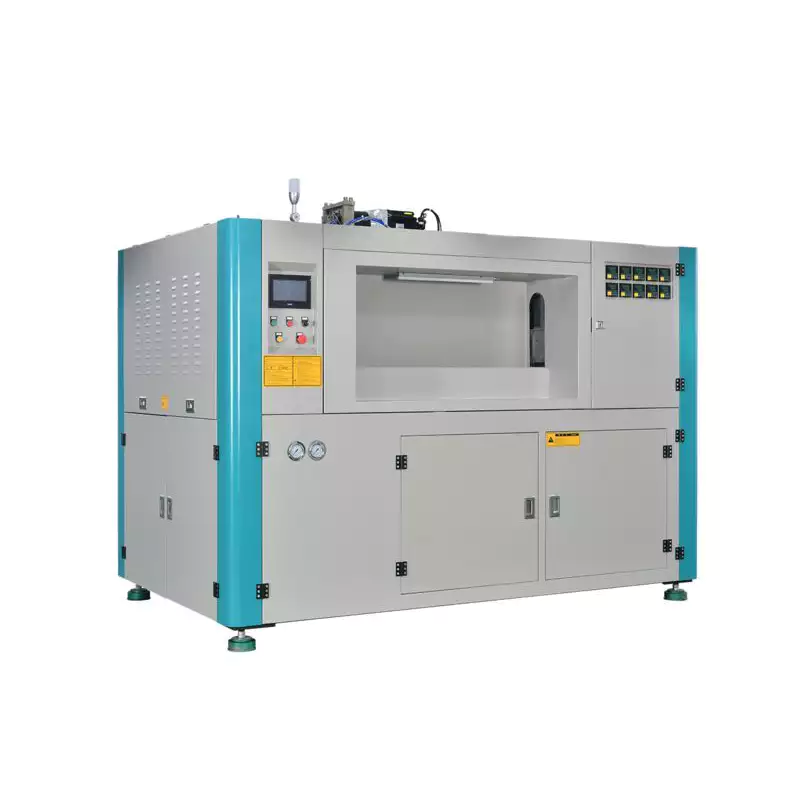
Le EP-HGA.AS-2C114.3 is a high-precision automatic two-step reheat stretch blow molding (RSBM) machine designed for manufacturers requiring the highest standards of bottle wall uniformity and neck-finish accuracy. The half-preblowing (AS) structural architecture distinguishes this series from standard ES-type machines: by incorporating a pre-expansion stage before full blow, the AS series achieves measurably more uniform wall distribution on narrow-neck, small-diameter containers — a critical requirement for eye-drop bottles, pharmaceutical syrups, and premium cosmetic flacons.
With a maximum container volume of 1,000ml and a theoretical output of 2,000 bottles per hour at 2 cavities, the EP-HGA.AS-2C114.3 is optimised for mid-to-high value, lower-volume production runs where quality consistency outweighs raw throughput. Adopting internationally recognised servo motors, precision reducers, and digital electrical components, the machine delivers stable performance across extended 24-hour production cycles with minimal thermal drift.
This machine is compatible with PET, PETG, and other stretch-grade thermoplastics, making it suitable for pharmaceutical, cosmetic, and personal care packaging applications across regulated and non-regulated markets. The production process involves zero human hand contact with the container at any stage — a prerequisite for GMP-aligned operations.
Core Technical Features
Half-Preblowing (AS) Structure
The AS-series half-preblowing mechanism expands the preform in a controlled intermediate stage before full pressure blow, resulting in more uniform radial wall thickness — especially critical for narrow-neck pharmaceutical and cosmetic containers where standard RSBM machines show measurable wall variation.
International-Grade Servo Drive System
Equipped with internationally recognised servo motors and precision reducers, the drive system provides consistent torque and speed across all clamping, stretching, and blowing motion axes. Energy consumption is significantly lower than hydraulic-dominant systems of comparable output.
High-Precision Neck-Finish Tolerance
The machine is designed to maintain strict neck-finish dimensional tolerances across both cavity positions, supporting compatibility with precision closure systems used in pharmaceutical dispensers, eye-drop applicators, and high-end cosmetic dispensing caps.
Digital Infrared Heating System
The digital infrared preform heating system provides zone-by-zone temperature control along the preform body, enabling precise thermal profiles for challenging bottle geometries including narrow shoulders, long necks, and asymmetric wall distributions.
Zero Hand-Contact Automated Output
From preform loading through finished bottle discharge, the EP-HGA.AS-2C114.3 operates as a fully sealed automated system. No manual intervention occurs at any stage of bottle formation, supporting compliance with pharmaceutical GMP and food-contact hygiene requirements.
AS vs. ES: Understanding the Difference
Buyers evaluating the AS series alongside the standard ES series should note the structural difference: ES machines use a direct single-blow sequence; AS machines insert a controlled half-preblow stage. For small-diameter, high-precision containers, AS delivers a measurable quality advantage. For larger-diameter, higher-volume standard containers, ES machines offer greater throughput efficiency. See our full RSBM machine range for a direct comparison.
Technical Specifications
| Molding Group — EP-HGA.AS-2C114.3 | ||
|---|---|---|
| Paramètre | Unit | Value |
| Clamping Stroke | mm | 122 |
| Mold-Open Distance | mm | 302 |
| Mold-Close Distance | mm | 180 |
| Stretching Stroke | mm | 400 |
| Mold-Open Distance (Blow) | mm | 50 |
| Mold-Close Distance (Blow) | mm | 114.3 |
| Preform Holder | — | 48 |
| caries | — | 2 |
| Container Specifications | ||
|---|---|---|
| Paramètre | Unit | Value |
| Max. Container Volume | ml | 1,000 |
| Max. Neck Diameter Range | mm | 88 |
| Max. Container Diameter | mm | 94 |
| Max. Container Height | mm | 260 |
| Theoretical Output | bph | 2,000 |
| Electrical System | ||
|---|---|---|
| Paramètre | Unit | Value |
| Max. Heating Power | kW | 45 |
| Common Heating Power | kW | 20 |
| Air System | ||
|---|---|---|
| Paramètre | Unit | Value |
| Operating Pressure | kg/cm² | 7 |
| Low Pressure Air Consumption | L/min | 600 |
| Blowing Pressure | kg/cm² | 35 |
| High Pressure Air Consumption | L/min | 1,600 |
| Operating Pressure (High) | kg/cm² | 6 |
| Cooling Water & Machine Dimensions | ||
|---|---|---|
| Paramètre | Unit | Value |
| Temperature Range | °C | 8–12 |
| Flow Rate | L/min | 30 |
| Dimensions de la machine (L×l×H) | mm | 2660 × 1660 × 2150 |
| Poids de la machine | kg | 2,600 |
Industry Applications & Compatible Bottle Types
The EP-HGA.AS-2C114.3 is deployed across two primary market segments where precision bottle quality takes precedence over high-volume output:
Emballage pharmaceutique
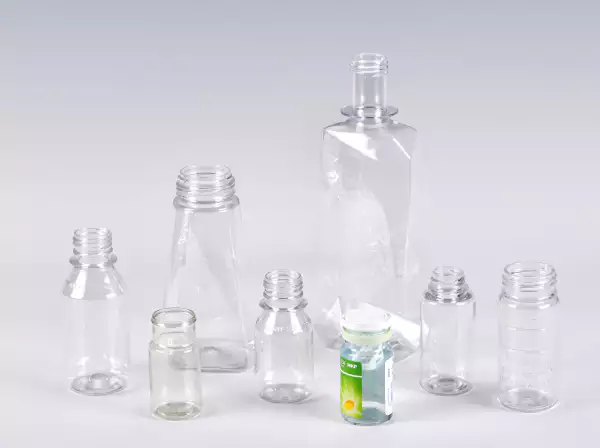
Oral liquid bottles, syrup bottles, eye-drop containers, nasal spray bottles, and medical dropper containers requiring tight neck-finish tolerances and wall-thickness uniformity. The AS structure is particularly suited to narrow-neck pharmaceutical bottles where a standard single-blow sequence produces measurable wall variation.
Cosmetic & Personal Care
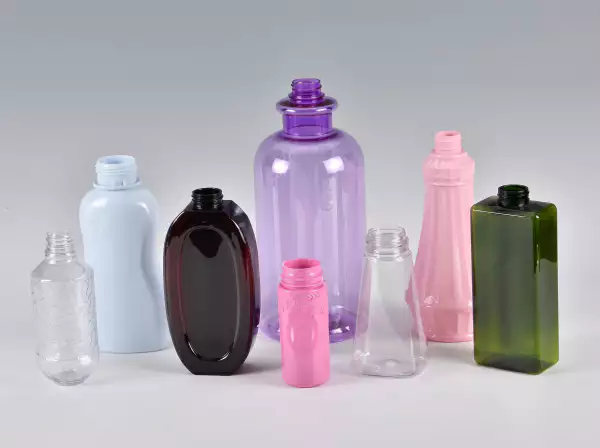
High-clarity serum bottles, toner bottles, essence flacons, lotion dispensers, and premium skincare packaging where optical clarity and surface finish consistency are non-negotiable. The half-preblowing structure achieves superior clarity on PET and PETG substrates compared to direct-blow equivalents.
Études de cas clients
India — Pharmaceutical Packaging
★★★★★
Application: Oral antibiotic liquid bottles (60ml and 100ml) with 28mm neck finish for child-resistant closures.
Problem solved: The facility had previously used a standard ES-type RSBM machine and experienced consistent rejection rates above 3% due to wall thinning at the bottle shoulder — a critical failure point for pressure-tested pharmaceutical containers. Switching to the AS-series half-preblowing architecture reduced rejections to below 0.4% within the first month of operation.
“The wall thickness improvement was immediate and measurable. Our QC team confirmed that shoulder thickness variance dropped from 0.18mm average to under 0.06mm. For our GDA audit, this was the data we needed.”
Vietnam — Premium Cosmetics
★★★★★
Application: PETG serum flacons (30ml, 50ml) for a domestic premium skincare brand producing for both local retail and export to South Korea.
Problem solved: The brand required a specific optical clarity target — bottles needed to appear glass-equivalent on shelf. Previous PET machines produced flacons with visible haze at the base due to insufficient preblowing. The AS structure eliminated the haze entirely on the PETG substrate at their specified bottle weight.
“Our retail buyer in Seoul commented that the bottle clarity was indistinguishable from glass in their product photography. That was a direct result of switching to the AS machine.”
Malaysia — Eye-Drop Manufacturer
★★★★★
Application: LDPE-equivalent narrow-neck eye-drop bottles (5ml, 10ml) with 13mm neck diameter requiring precise dropper-tip compatibility.
Problem solved: Existing equipment produced inconsistent neck ovality at the 13mm neck diameter — dropper tips failed the leak test at a rate of approximately 1 in 80 bottles. The AS-series neck precision reduced dropper-tip leak failures to 1 in over 2,000 bottles under identical test conditions.
“For eye-drop containers, a failed seal is not just a quality issue — it is a patient safety issue. The neck-finish precision of this machine solved a problem we had been working around for two years.”
Foire aux questions
Ready to Discuss Your Bottle Production Requirements?
Our engineering team is available to review your container specifications, recommend the optimal machine configuration, and provide a detailed quotation. Share your bottle drawing and production targets to get started.