
ISBM Makinesiyle Hangi Ürünler Üretilebilir? Endüstriyel Uygulamalar Açıklanıyor
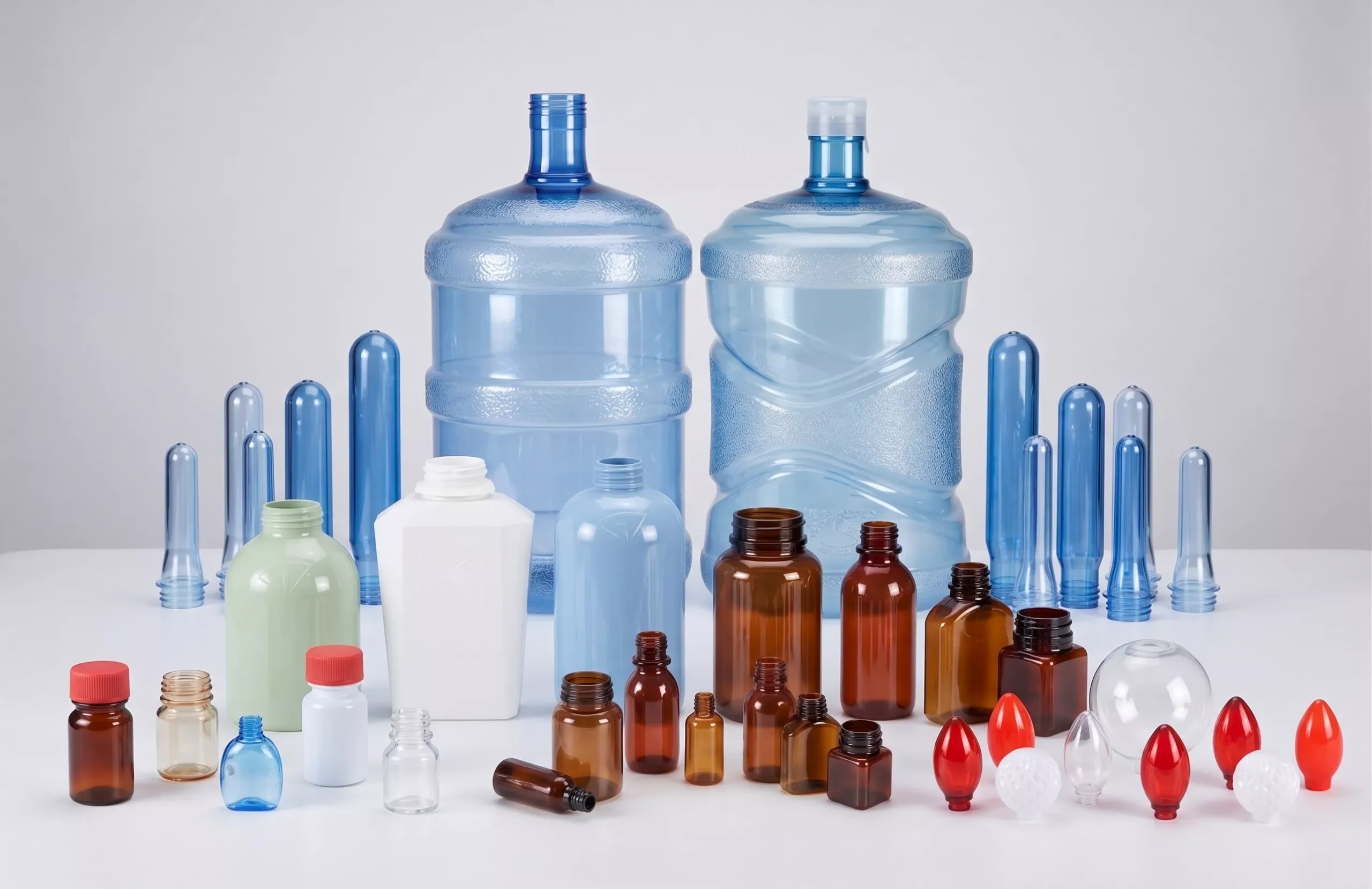
Injection stretch blow molding machines are deployed across an extraordinarily wide range of industries — from pharmaceutical cleanrooms producing 30ml syrup bottles to food and beverage lines filling 2-litre PET containers at thousands of units per hour. What unites all these applications is the common requirement for precision neck finishes, lightweight walls, and the superior optical clarity and barrier performance that only biaxial orientation can deliver.
This guide maps the full commercial application landscape of ISBM-produced containers, industry by industry, with specific product types, material choices, volume ranges, and the technical requirements that make ISBM the preferred process in each sector. Whether you are evaluating a machine investment for an established product line or exploring ISBM for a new packaging development, this overview will help you understand where the technology delivers its maximum commercial value.
The ISBM Advantage: What Makes These Products Better
Before exploring applications sector by sector, it is worth stating why ISBM-produced containers outperform alternatives across such diverse end markets. Three properties — precision, orientation, and integration — are the recurring commercial drivers:
The injection-molded neck is formed to final dimensions with tolerances of ±0.1mm or better. This enables reliable engagement with child-resistant closures, pumps, valves, droppers, sprayers, and tamper-evident systems — consistently across millions of bottles.
Biaxial stretching raises tensile strength 3–4×, reduces gas permeability 30–60%, and enables 30–50% material reduction versus unoriented alternatives. Every industry benefits differently — food from barrier, pharma from precision, cosmetics from clarity, packaging from lightweighting.
In one-step ISBM, the entire process from resin to finished bottle occurs in one machine with one operator. No preform storage, handling contamination, or preform supply chain complexity. This simplicity is commercially valuable across all industries.
Sector 1 — Pharmaceutical and Healthcare Products
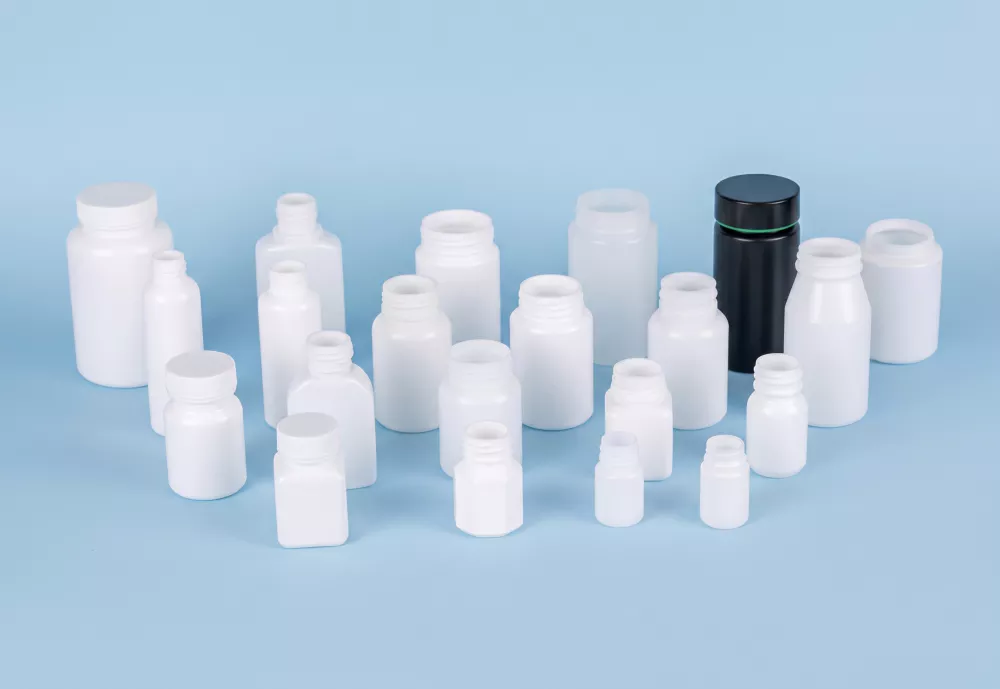
The pharmaceutical sector is the most demanding ISBM application environment. Containers must pass pharmacopoeial testing (USP, Ph.Eur.), maintain dimensional tolerances for closure compatibility, and be produced under GMP controls with full batch traceability. ISBM is the technology of choice for oral pharmaceutical liquid and solid dose containers.
| Product | Ses Seviyesi Aralığı | Malzeme | Temel Gereksinim |
|---|---|---|---|
| Oral syrup / suspension | 60ml – 500ml | PET, PP | Low AA, child-resistant neck, chemical compatibility |
| Tablet / capsule jar | 30ml – 300ml | PET, PP | Wide-mouth neck; moisture barrier; CRC compatibility |
| Eye drops / ophthalmic | 5ml – 15ml | PET, PP | Precision dropper tip interface; particle-free |
| Nasal spray bottle | 15ml – 30ml | PET, PP | Pump neck tolerance; top-load resistance |
| Vitamin / supplement container | 100ml – 1000ml | PET, PP | UV barrier option; IHS liner compatibility |
Sector 2 — Cosmetics, Skincare and Personal Care
Cosmetic packaging is the segment where ISBM’s aesthetic capabilities shine brightest. The convergence of sustainability pressure (replacing heavy glass), brand premiumisation (demanding glass-like clarity at plastic cost), and SKU proliferation (frequent mold changeovers) makes one-step ISBM the optimal technology for this sector.
| Product Category | Örnekler | Malzeme | ISBM Advantage |
|---|---|---|---|
| Skincare | Serum, toner, moisturiser, face oil | PETG, PET | Glass-like clarity, premium pump compatibility |
| Haircare | Shampoo, conditioner, treatment | PET, PP | High gloss; light weight vs EBM alternatives |
| Fragrance | Perfume, eau de toilette, body spray | PETG | Glass replacement; aromatic chemical resistance |
| Body care | Body lotion, sunscreen, hand cream | PET, PETG | Pump dispenser precision; complex shoulder geometry |
Sector 3 — Food and Beverage Packaging
Food and beverage is the highest-volume ISBM application sector globally. The combination of PET’s excellent oxygen barrier, crystal clarity (product visibility is commercially important for juices and sauces), and low weight per litre makes ISBM PET the dominant choice for non-carbonated beverages, condiments, cooking oils, and specialty foods.
| Product | Ses Seviyesi Aralığı | Malzeme | Critical Spec |
|---|---|---|---|
| Juice / juice drink | 250ml – 1.5L | Evcil hayvan | O2 barrier for shelf life; clarity for product visibility |
| Cooking oil | 500ml – 2L | Evcil hayvan | Oil resistance; clarity; lightweight vs HDPE alternative |
| Sauce / condiment | 150ml – 750ml | Evcil hayvan | Wide-mouth dispensing; barrier; vinegar resistance |
| Mineral water | 250ml – 1.5L | Evcil hayvan | Lightweighting; top-load for stacking; clarity |
| Vinegar / acidic products | 250ml – 1L | Evcil hayvan | Acid compatibility; barrier; dimensional stability |
Sector 4 — Daily Chemical and Household Products
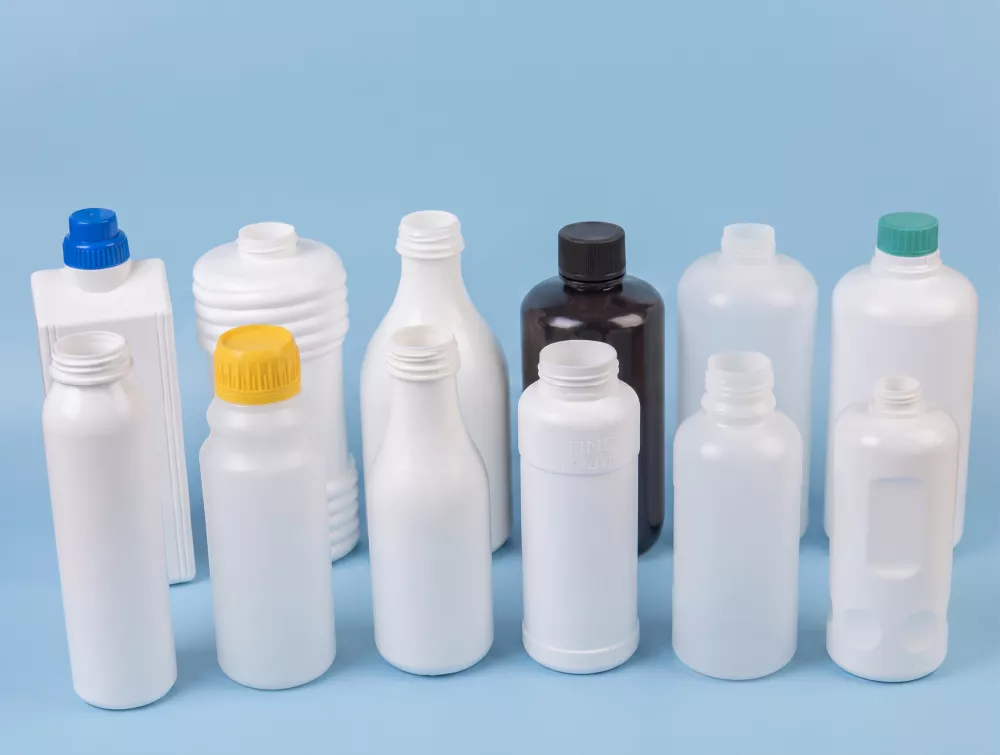
Household and daily chemical products are a large and growing ISBM application segment, driven by consumer preferences for squeezable, ergonomic, transparent containers versus the opaque HDPE EBM bottles that dominated the category historically. PET ISBM bottles for dishwashing liquid, laundry detergent, and personal hygiene products offer a step-change in shelf presence through their clarity and gloss.
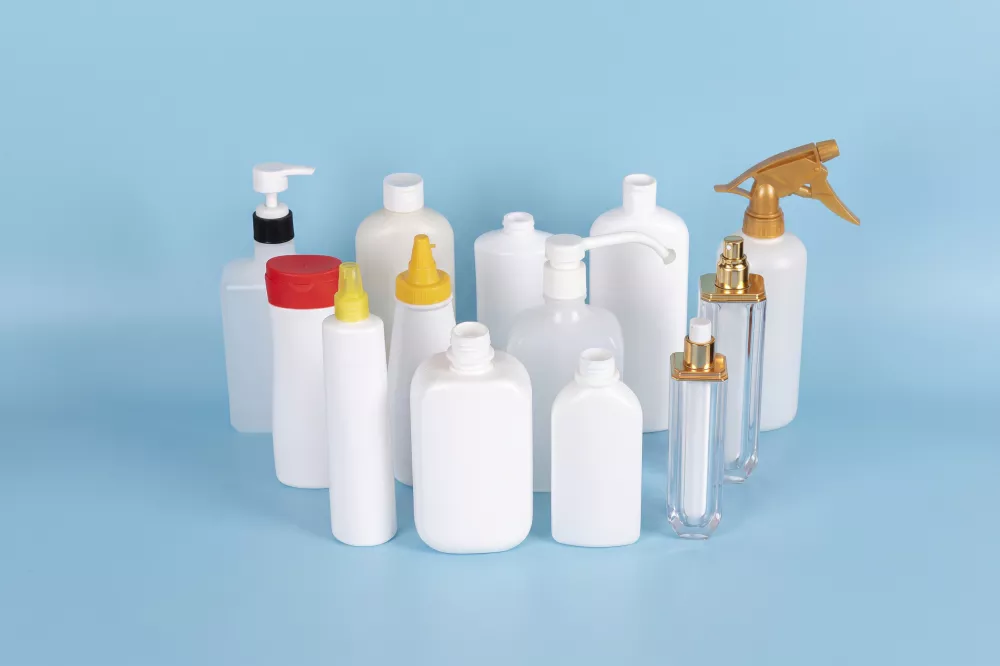
PET bottles replacing HDPE for transparency and brand differentiation. 300ml–1L range. Surfactant compatibility of PET must be verified with specific formulation.
Growing trend toward clear, reclosable PET laundry liquid bottles. 500ml–2L. Alkaline detergent compatibility to be confirmed per formulation.
Clear or tinted PET in 500ml–1.5L. Premium tier often uses PETG for aesthetic glass-replacement. Wide dispenser neck for dosing caps.
100ml–500ml PET. Alcohol resistance critical — confirm PET grade compatibility with high-ethanol formulations. PP alternative for maximum chemical resistance.
Sector 5 — Agricultural and Industrial Chemical Products
Agricultural chemical packaging (herbicides, pesticides, fungicides) and industrial chemical packaging represent a high-growth market for ISBM, particularly for products where the clarity of PET (enabling visual confirmation of remaining product and absence of particulate contamination) is a functional advantage over traditionally used HDPE.
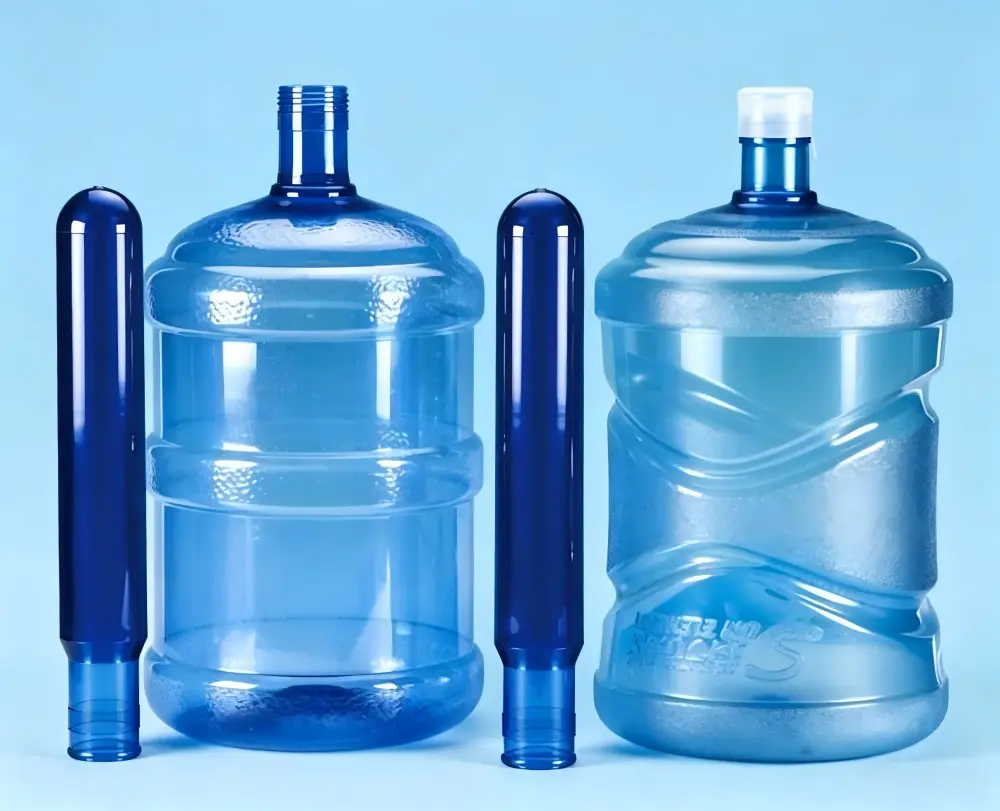
Key considerations for agricultural/industrial ISBM applications:
- Chemical compatibility testing between container material and active ingredient / solvent system is mandatory before commercial launch
- Wall thickness specification must account for static and dynamic load from pallet stacking — ISBM orientation provides strength advantage vs standard EBM
- UN certification (for hazardous material transport) may be required — UN-certified ISBM containers are commercially available
- UV stabiliser addition to PET resin recommended for products stored outdoors or in high-light environments
- Color coding of containers (industry-specific color for herbicide vs pesticide vs fungicide) via masterbatch dosing
Sector 6 — Feeding Bottles and Baby Products
Infant feeding bottles represent a niche but technically exacting ISBM application. The combination of precise neck thread (for nipple/teat collar engagement), absence of BPA and other potentially harmful migrants, autoclavability (for PP versions), and extreme clarity for visual milk level monitoring makes ISBM the natural production process for premium baby bottles.
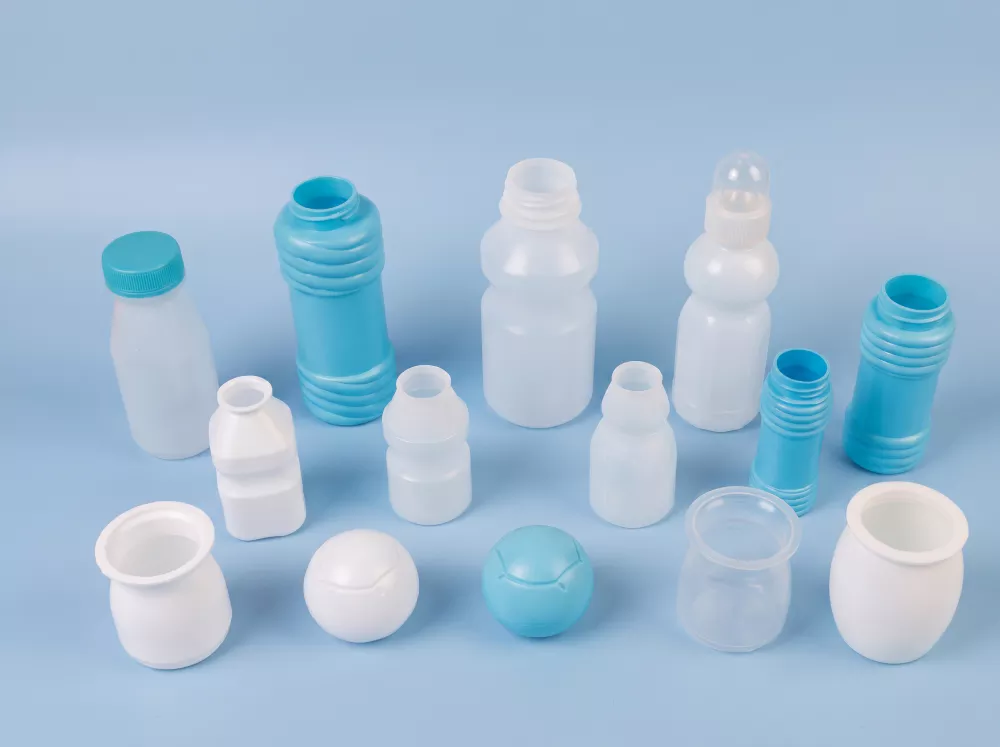
- Material: PET (BPA-free confirmed) or PP (autoclavable); no polycarbonate
- Volume range: 120ml – 300ml
- Neck finish: standardised baby bottle neck (wide-mouth, e.g. Dr. Brown’s, MAM, or brand-specific proprietary)
- Chemical compliance: EU Regulation 10/2011, FDA 21 CFR, EN 14350 (baby bottles)
- No plasticisers, no BPA, no phthalates — confirm with resin supplier Material Safety Data Sheet
Sector 7 — Wide-Mouth Jars and Specialty Containers
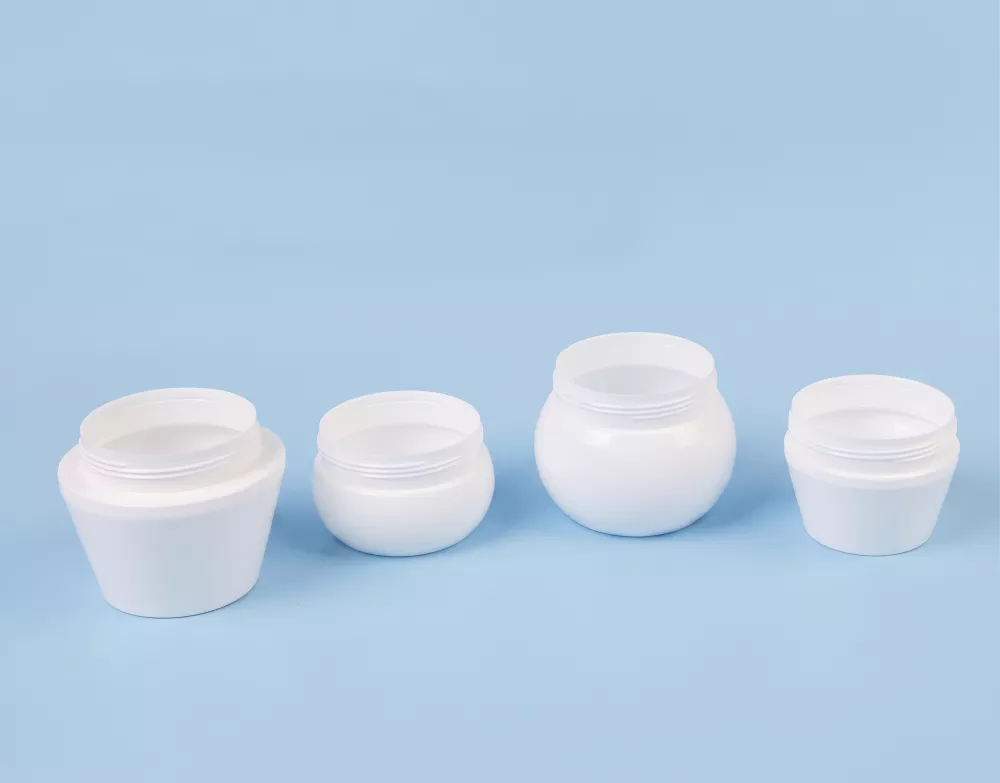
Wide-mouth jars — containers with neck diameters of 38mm and above — represent a unique capability of one-step ISBM. The conditioning station allows the preform body temperature to be sculpted zone by zone, enabling the wide shoulder and short body geometry of a jar to be blown successfully. This geometry is very difficult to achieve in two-step ISBM, where linear IR ovens are not well-suited to the unusual proportions of jar preforms.
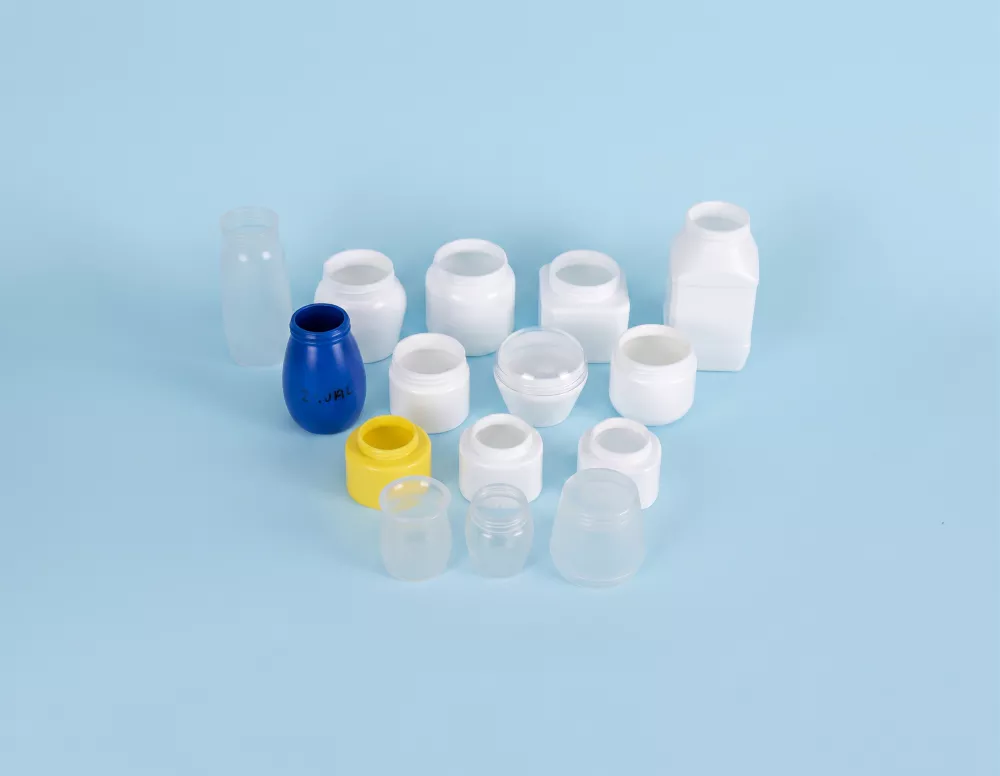
Wide-mouth ISBM jar applications include peanut butter, honey, jam, salsa, and other viscous food products where spooning access is required; pharmaceutical tablet and capsule jars with child-resistant wide-mouth closures; cosmetic jar formats for face creams and body butters; and supplement containers (protein powder, pre-workout formulas) in sizes up to 1.5L.
For a full review of our machine capabilities for your specific product application, explore our ISBM machine range veya contact our application engineering team with your container drawing and target volume.
Applications at a Glance
| Sector | Typical ISBM Material | Ses Seviyesi Aralığı | Output Scale |
|---|---|---|---|
| İlaç | PET, PP | 5ml – 500ml | Low to mid volume; GMP required |
| Cosmetics / personal care | PETG, PET, PP | 20ml – 500ml | Mid volume; multi-SKU capability |
| Food and beverage | Evcil hayvan | 250ml – 2L | Mid to high volume |
| Daily chemical / household | PET, PP | 300ml – 2L | Mid to high volume |
| Agricultural / industrial | PET, PP | 500ml – 5L | Mid volume; chemical testing required |
| Baby products | PET, PP (BPA-free) | 120ml – 300ml | Low to mid volume; strict compliance |
| Geniş ağızlı kavanozlar | PET, PP | 100ml – 1.5L | Mid volume; one-step ISBM preferred |
Sıkça Sorulan Sorular
What is the largest container that can be made on an ISBM machine?
Can ISBM bottles be used for carbonated drinks on a one-step machine?
Can I produce both narrow-mouth and wide-mouth containers on the same ISBM machine?
Tell Us About Your Product — We Will Match the Right Machine
Share your container type, content, target volume, and material preference — our application engineers will recommend the optimal ISBM machine model and cavitation.