
The Pressure Challenge of Carbonated Drink Packaging
Carbonated beverages — spanning cola, sparkling water, energy drinks, craft sodas, and flavored carbonated drinks — represent one of the most technically demanding segments in beverage packaging. The internal gas pressure generated by dissolved CO2, combined with consumer expectations for crystal-clear transparency, lightweight handling, and extended shelf life, creates a complex set of packaging performance requirements. The Máquina ISBM — one-step Injection Stretch Blow Molding machine — addresses these demands through its unique biaxial orientation technology, delivering PET carbonated beverage bottles with superior pressure resistance, CO2 retention, and dimensional consistency.
Carbonated drinks contain dissolved carbon dioxide gas that generates significant internal pressure within the sealed container — typically in the range of 3.5 to 6.0 bar (50–87 psi) at ambient temperature. This internal pressure affects every aspect of bottle performance:
- Structural integrity: The bottle must withstand internal pressure without deforming, bulging, or failing at the base, sidewall, or neck during filling, capping, transportation, and retail display.
- CO2 retention: The bottle wall must act as an effective barrier against CO2 permeation to maintain carbonation level and flavor profile throughout the product’s shelf life.
- Base stability: Pressurized bottles must maintain a stable base footprint and resist rocking or tipping on retail shelves and in consumer refrigerators.
- Cap compatibility: The bottle neck must withstand both internal pressure and the mechanical torque of cap application and removal without deformation or thread damage.
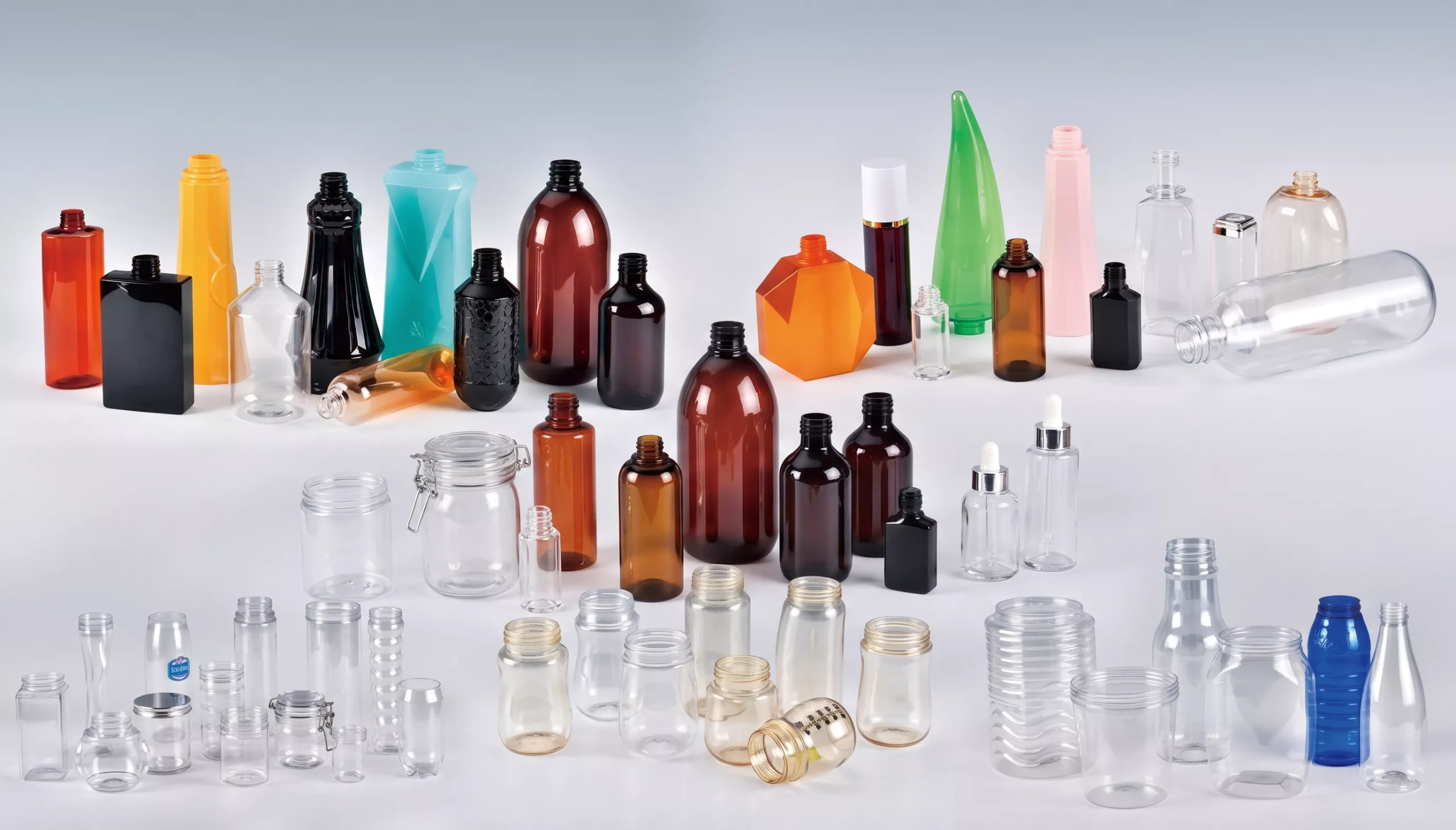
How ISBM Achieves Biaxial Orientation for CO2 Resistance
The mechanical and barrier properties of PET are dramatically enhanced when the polymer chains within the material are aligned in an ordered structure — a state known as molecular orientation. ISBM achieves this through its simultaneous axial and radial stretching process during the blow molding stage, creating what materials scientists call biaxial orientation.
During the blow molding step, a stretch rod extends axially through the conditioned preform at a controlled speed and to a precisely controlled length, stretching the PET in the longitudinal direction. Simultaneously, high-pressure air at 2.0–3.5 MPa inflates the preform radially into the blow mold cavity, stretching the PET in the circumferential direction. This simultaneous two-direction stretching aligns PET polymer chains in a planar network structure that dramatically increases material performance in multiple dimensions.
Tensile Strength
Increased by 2–4x compared to unoriented PET, enabling thinner walls that resist internal pressure without structural failure.
CO2 Barrier
CO2 permeation rate reduced by 2–3x compared to unoriented PET, significantly extending carbonation shelf life.
Impact Resistance
Biaxially oriented PET absorbs impact energy more effectively, preventing bottle failure during transport drops.
Clarity
Chain alignment reduces light scattering, achieving haze below 2% — glass-like transparency for premium product presentation.
Key Technical Advantages for Carbonated Beverage Bottles
Internal Pressure Resistance (4–6 bar)
ISBM-produced PET bottles for carbonated beverages are designed and tested to withstand internal pressures of 4–6 bar without structural failure or permanent deformation. The combination of biaxial molecular orientation, optimized wall thickness distribution, and precise process control of stretch ratio enables bottles to maintain dimensional integrity under these pressures throughout filling, capping, distribution, and consumer use. Standard pressure test protocols include burst pressure testing (minimum burst pressure typically 7–10 bar), top load testing, and drop impact testing at commercially relevant internal pressure levels.
Superior CO2 Retention & Barrier Performance
Biaxially oriented PET produced by ISBM exhibits CO2 permeability rates of 4–8 cc/(package day) for standard 500ml bottles, depending on wall thickness and specific PET grade. For cola and carbonated soft drink applications requiring 3–6 month shelf life, this CO2 barrier performance is adequate without additional barrier coatings or additives. For premium sparkling water or craft carbonated beverage applications requiring longer shelf life, ISBM machines can process PET materials incorporating passive barrier additives or multi-layer EVOH co-injection to further reduce CO2 permeation.
Uniform Wall Thickness Distribution
Wall thickness uniformity is critical for carbonated beverage bottles because thin spots create structural weak points that can fail under internal pressure, while thick spots add unnecessary material weight and cost. ISBM’s injection-molded preform approach delivers inherently superior wall thickness control compared to EBM processes — wall thickness uniformity within +/- 5% for standard PET preforms, resulting in a highly uniform bottle wall thickness distribution that optimizes structural performance, CO2 barrier, and material efficiency simultaneously.
Tight Neck Tolerances of ±0.1mm
For carbonated beverage bottles, the neck finish must seal reliably against both atmospheric oxygen ingress and internal CO2 pressure egress. ISBM’s injection-molded neck finish achieves thread and outer diameter tolerances of ±0.1mm, ensuring consistent compatibility with PCO-1881, PCO-1810, or 28mm standard closure systems. This dimensional precision eliminates seal failure events that could result in carbonation loss during distribution or CO2 pressure events in warm conditions.
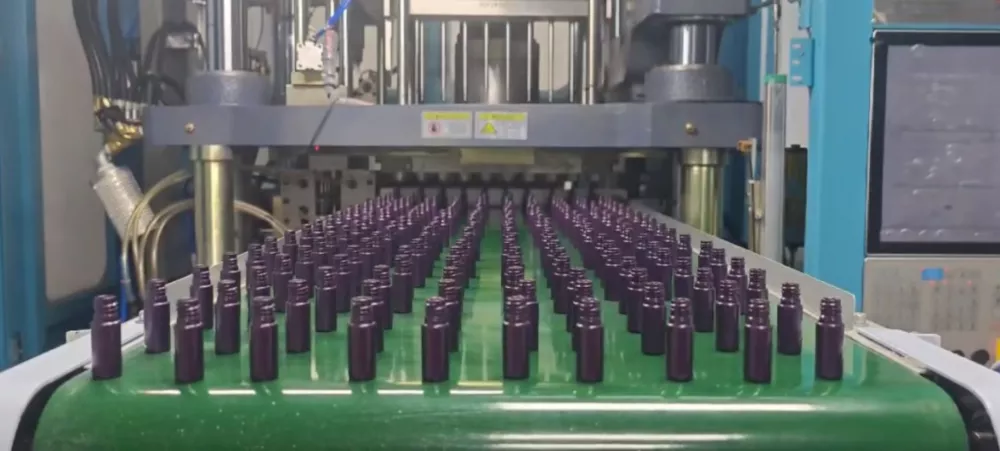
ISBM vs EBM vs Two-Step SBM: Technology Comparison
| Factor de rendimiento | ISBM (One-Step) | Two-Step SBM | EBM |
|---|---|---|---|
| Neck Dimension Accuracy | Excellent (±0.1mm) | Good (±0.2mm) | Poor (±0.5mm+) |
| Wall Thickness Uniformity | Excellent | Excellent | Moderado |
| CO2 Barrier (Biaxial Orientation) | Excellent | Excellent | None |
| Energy Consumption | Lowest (no reheat) | Higher (reheat step) | Moderado |
| Optical Clarity | Glass-like (<2% haze) | Excellent | Good |
| Capital Investment | Lower (single machine) | Higher (2 machines) | Lower |
Material Selection for Carbonated Beverage Bottles
Standard PET Homopolymer
The default choice for high-volume carbonated beverage bottles. Offers the best combination of mechanical properties after biaxial orientation, CO2 barrier performance, clarity, and processability in ISBM equipment. Available in a wide range of intrinsic viscosity (IV) grades optimized for different bottle wall thicknesses and cavity counts.
IPA-Modified PET Copolymer
Isophthalic acid (IPA) copolymers of PET offer improved CO2 barrier properties compared to standard PET, with CO2 permeation reductions of 15–25%. Particularly suitable for craft carbonated beverages and premium sparkling water requiring extended shelf life beyond standard PET performance.
PETG Copolymer
PETG offers exceptional clarity and impact resistance, along with broader processing temperature windows. Preferred for premium packaging applications where visual differentiation and brand aesthetics are priorities alongside functional performance.
Bottle Design Flexibility & Size Range
| Bottle Volume | Common Application | Internal Pressure Range | Typical Wall Thickness |
|---|---|---|---|
| 250–330ml | Single-serve cola, energy drink | 4.5–5.5 bar | 0.28–0.35mm |
| 500ml | Standard carbonated soft drink | 4.0–5.0 bar | 0.30–0.38mm |
| 1.0–1.5L | Family-size sparkling water, cola | 3.5–4.5 bar | 0.32–0.42mm |
| 2.0L | Large format carbonated drinks | 3.0–4.0 bar | 0.35–0.45mm |
Production Automation & Quality Control
For carbonated beverage producers, production line integration and quality consistency are as important as individual bottle performance. ISBM machines integrate seamlessly with downstream carbonated beverage filling and packaging lines, providing the output consistency and format flexibility that modern beverage operations demand.
Inline quality monitoring systems for carbonated bottle production typically include vision inspection systems that check for visual defects (flash, contamination, surface defects), weight checkers that verify bottle weight within defined tolerances (typically ±1–2g), and leak testing stations that apply internal air pressure to verify neck seal integrity before bottles enter the filling area.
Modern ISBM machines support rapid format changeover between different bottle sizes or styles, with mold change systems designed to minimize downtime. Quick-release mold mounting systems and pre-programmed process parameter sets for each bottle format enable changeovers in 2–4 hours — significantly faster than two-step SBM systems that require separate preform mold and blow mold changes on two independent machines.
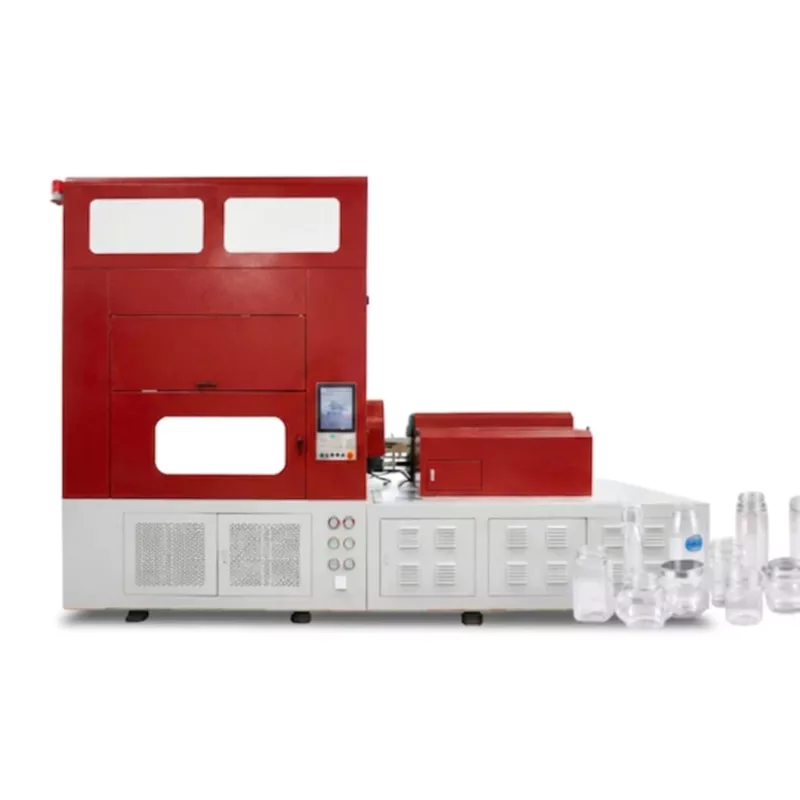
Aplicaciones en el mercado global
The global carbonated soft drink market exceeded USD 400 billion in 2024 and continues to grow. ISBM machine technology serves the full spectrum of producers in this market:
- Major carbonated soft drink brands requiring high-volume, consistent PET bottle production for national and international distribution
- Craft soda and premium sparkling water producers seeking distinctive bottle designs and superior transparency
- Energy drink manufacturers requiring compact, high-pressure-rated bottle formats
- Regional carbonated beverage producers in emerging markets establishing in-house bottle manufacturing capability
- Contract packaging companies serving multiple carbonated beverage brands from flexible ISBM production lines
Explorar contenido relacionado
- View our full ISBM Machine lineup to find the right model for your carbonated beverage bottle production volume.
- Explora nuestra complete packaging solutions for beverage, food, and personal care industries.
- Contact our team via the About Us page to learn more about Ever Power HG’s engineering expertise.
Produce Better Carbonated Beverage Bottles — Start with the Right ISBM Machine
Ever Power HG’s ISBM machines deliver the biaxial orientation precision, energy efficiency, and production consistency that carbonated beverage bottle manufacturers demand. Our application engineers will recommend the optimal machine configuration, preform design, and mold specification for your carbonation pressure requirements and output targets.