Descripción
Hot-Filling Specialist · Semi-Auto · 1 Cavity · 1.25L · 88–95°C Rated · Tea Beverage · Pasteurisation Line
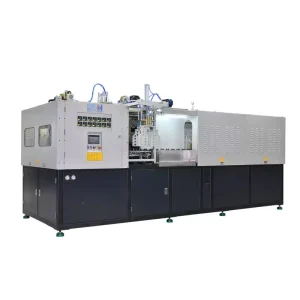
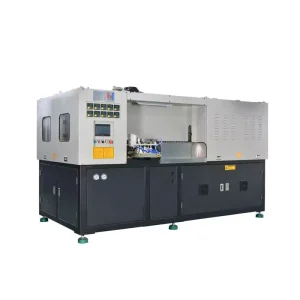
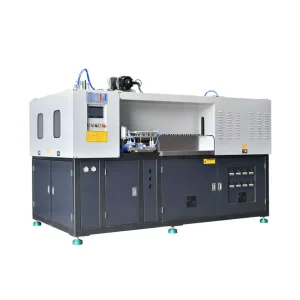
EP-HGS200B Semi-Automatic Hot-Filling PET Blow Molding Machine
A semi-automatic PET blow molding machine purpose-built for hot-fill tea beverage bottles, hot-fill juice containers, and any bottle used on a pasteurisation filling line up to 88–95°C. Not a general-purpose machine — this is a specialist hot-fill solution. For standard cold-fill production at 1.25 litres, the EP-HGS-200A is the correct machine.
HGS200B vs HGS-200A — Hot-Fill vs Standard
El HGS200B and HGS-200A share the same container volume (1.25L) and look nearly identical. Ordering the wrong model means your bottles will either deform at hot-fill temperatures (if you order HGS-200A for a hot-fill line) or you will overpay for hot-fill capability you do not need (if you order HGS200B for cold-fill).
| Parámetro | HGS200B ← This Machine | HGS-200A |
|---|---|---|
| Solicitud | Hot-fill: tea, juice, pasteurisation | Cold-fill: all industries |
| Temperature Resistance | 88–95°C | Standard (not hot-fill rated) |
| Output | 400–550 bph | 500–980 bph |
| Select When | Filling temperature > ~60°C | Standard cold-fill, all industries |
→ Producing cosmetics, pharmaceuticals, food condiments, or cold-fill beverages? You need the EP-HGS-200A, not this machine.
Machine Overview
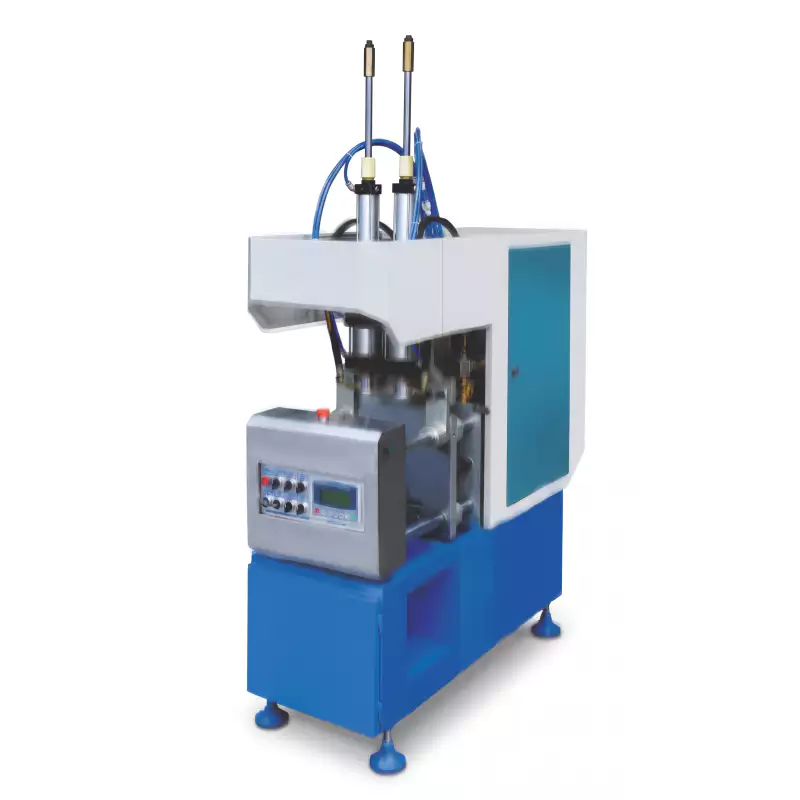
El EP-HGS200B is a specialist semi-automatic blow molding machine for PET bottles used on hot-fill lines — tea beverage bottles, hot-fill juice bottles, and any container filled on a pasteurisation line where the filling temperature reaches 88–95°C. It is specifically designed for this application and is not a general-purpose machine.
Standard PET bottles produced on the HGS-200A or any other standard blow molding machine will deform when filled with product at temperatures above approximately 60°C. Hot-fill PET bottles require a specific production process — higher blow temperature, longer cooling time, controlled crystallisation — that creates the material structure necessary to withstand hot-fill conditions without deformation. The HGS200B is engineered for this production process.
The HGS200B covers tea beverage bottles for ambient-shelf distribution (bottled tea, herbal drinks, kombucha produced on hot-fill lines), hot-fill juice and nectar bottles, and any pharmaceutical or food product filled on a pasteurisation line requiring containers rated to the Baumé pasteurisation temperature range. Contact our engineering team to confirm your specific filling temperature and process compatibility. For cold-fill applications, the EP-HGS-200A is the correct machine.
Technical Specifications
| Complete Specifications — EP-HGS200B | ||
|---|---|---|
| Parámetro | Unidad | Valor |
| Pillar Space | mm | 380 × 210 |
| Mold Size | mm | 120–200 |
| Open Mold Stroke | mm | 200 |
| Stretching Stroke | mm | 360 |
| Sealing Stroke | mm | 40 |
| Temperature Resistance | °C | 88–95 |
| Power Voltage | V/Hz | 220V / 50Hz |
| Operating Pressure | MPA | 0.8 |
| Blowing Pressure | MPA | 3.0 |
| Output (Efficiency) | bph | 400–550 |
| Max. Bottle Capacity | L | 1.25 |
| Dimensiones de la máquina (largo × ancho × alto) | mm | 1,550 × 560 × 1,450 |
| Peso de la máquina | kg | 500 |
Complete specifications including hot-fill process parameters in the technical datasheet. Request the full datasheet.
Estudios de casos de clientes
Vietnam — Tea Beverage Brand
★★★★★
Application: 500ml and 1,000ml hot-fill PET bottles for a Ho Chi Minh City-based ready-to-drink tea brand distributing bottled jasmine tea, green tea, and herbal tea through retail and convenience channels across Vietnam.
Problem solved: The brand’s hot-fill tea production line operated at 88°C filling temperature — a standard for ambient-shelf tea beverage products requiring pasteurisation. Standard PET bottles deformed on the filling line. The HGS200B produced hot-fill rated PET bottles that withstood the 88°C filling temperature without deformation, enabling the brand to transition from glass to PET packaging with full hot-fill line compatibility.
“Glass was heavy and breakage was costly. PET at 88°C requires the right bottle. The HGS200B gave us hot-fill PET that worked on the line — no deformation, no rejects. The transition from glass paid back in six months.”
Thailand — Fruit Juice Manufacturer
★★★★★
Application: 300ml, 500ml, and 1,000ml hot-fill PET juice bottles for a Bangkok-based fruit juice manufacturer producing ambient-shelf 100% fruit juice and nectar products for Thai retail and ASEAN export.
Problem solved: The manufacturer’s hot-fill juice line operated at 90–92°C — above the standard PET deformation threshold. They had previously used glass, but retail buyers were requesting PET for weight and sustainability reasons. The HGS200B enabled the transition to hot-fill PET at the manufacturer’s actual filling temperature, with bottles that met the retailer’s material specification without sacrificing hot-fill compatibility.
“Retailers wanted PET. Our line runs at 92°C. The HGS200B produces bottles that work at that temperature — that’s the machine that solved our problem. Nothing else in the range would have done it.”
Indonesia — Herbal Drink Producer
★★★★★
Application: 250ml and 500ml hot-fill PET bottles for a Surabaya-based traditional herbal drink (jamu) producer bottling pasteurised herbal beverage products for modern retail distribution across Java and Bali.
Problem solved: The producer’s pasteurisation process required bottles rated to 90°C — the standard temperature for their jamu pasteurisation protocol. Moving from traditional glass bottles to PET required a hot-fill rated PET bottle that would maintain container integrity at pasteurisation temperature. The HGS200B produced the hot-fill PET bottles required, enabling the brand to enter modern retail with PET packaging compliant with their pasteurisation process.
“Modern retail demanded PET. Pasteurisation at 90°C demanded hot-fill rated bottles. The HGS200B was the only semi-automatic machine that could do both. It opened the modern retail channel for us.”
Preguntas frecuentes
Enquire About the EP-HGS200B
For hot-fill tea beverage, hot-fill juice, and pasteurisation-line PET bottle production up to 1.25 litres at 88–95°C. Share your filling temperature, bottle specification, and annual volume for a hot-fill process assessment. For cold-fill production, see the EP-HGS-200A.